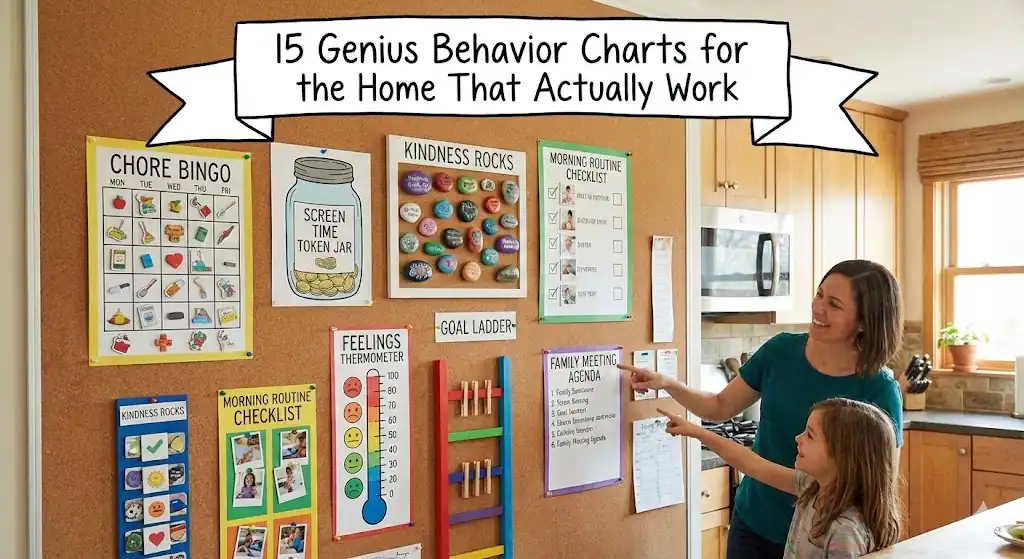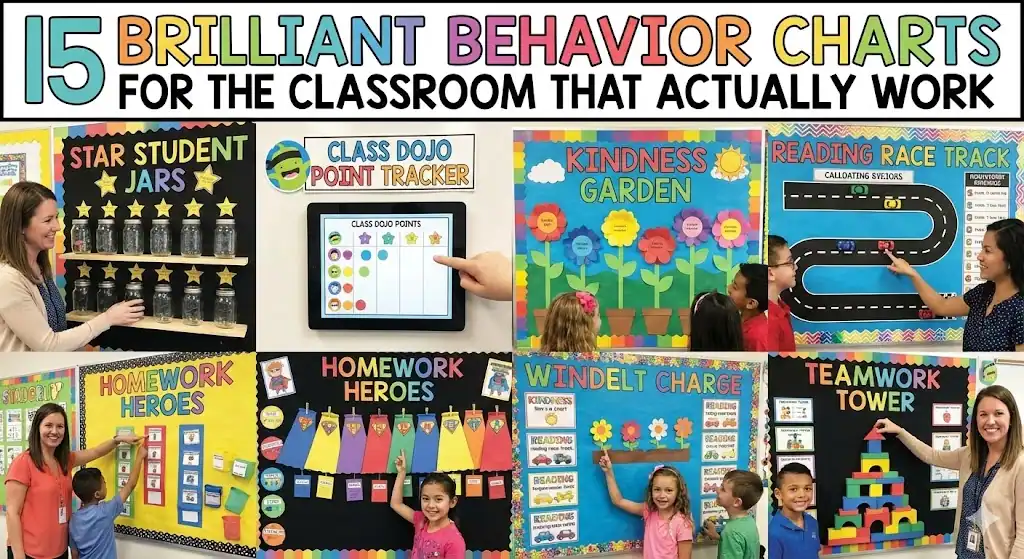
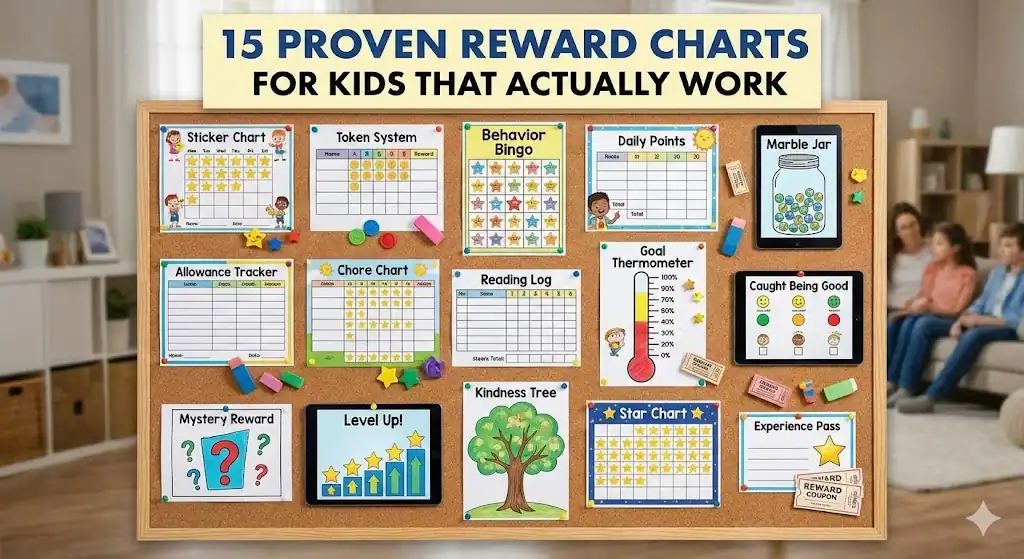
Hey there, fellow parent, guardian, or anyone trying to get a kid to do literally anything without turning it into a three-hour negotiation session. 😅 If you’ve ever felt like your child’s energy could power a small city—but somehow that energy mostly goes into ignoring chores, arguing about homework, or mysteriously disappearing when it’s time to brush teeth—then welcome to the club. I’ve been there. Trust me, I’ve tried bribing with candy (temporary solution), pleading (mostly ignored), and threatening the “mystery box of doom” (don’t ask).
Enter reward charts for kids. These little lifesavers aren’t just stickers on paper—they’re magic wands that actually motivate kids to do what you need them to do. But not all charts are created equal. That’s why I’ve put together this guide to the 15 proven reward charts for kids that actually work. Grab a cup of coffee (or wine, no judgment), and let’s make parenting slightly more enjoyable today.
Why Reward Charts Actually Work
Before we jump into the juicy list, let’s chat about why these charts work. Ever wondered why kids respond to them?
- Instant Gratification: Kids love seeing progress immediately. A sticker here, a star there, and suddenly brushing teeth isn’t the worst part of their day.
- Positive Reinforcement: They get rewarded for good behavior rather than punished for bad. And let’s be real—punishment often just leads to epic eye-rolls and sass.
- Visual Motivation: Seeing a chart grow over time keeps them excited. Who doesn’t like checking off achievements, right? Even adults secretly love it.
So yeah, reward charts aren’t just cute—they work. And IMO, they save your sanity more than any parenting book ever could.
1. Classic Sticker Reward Chart
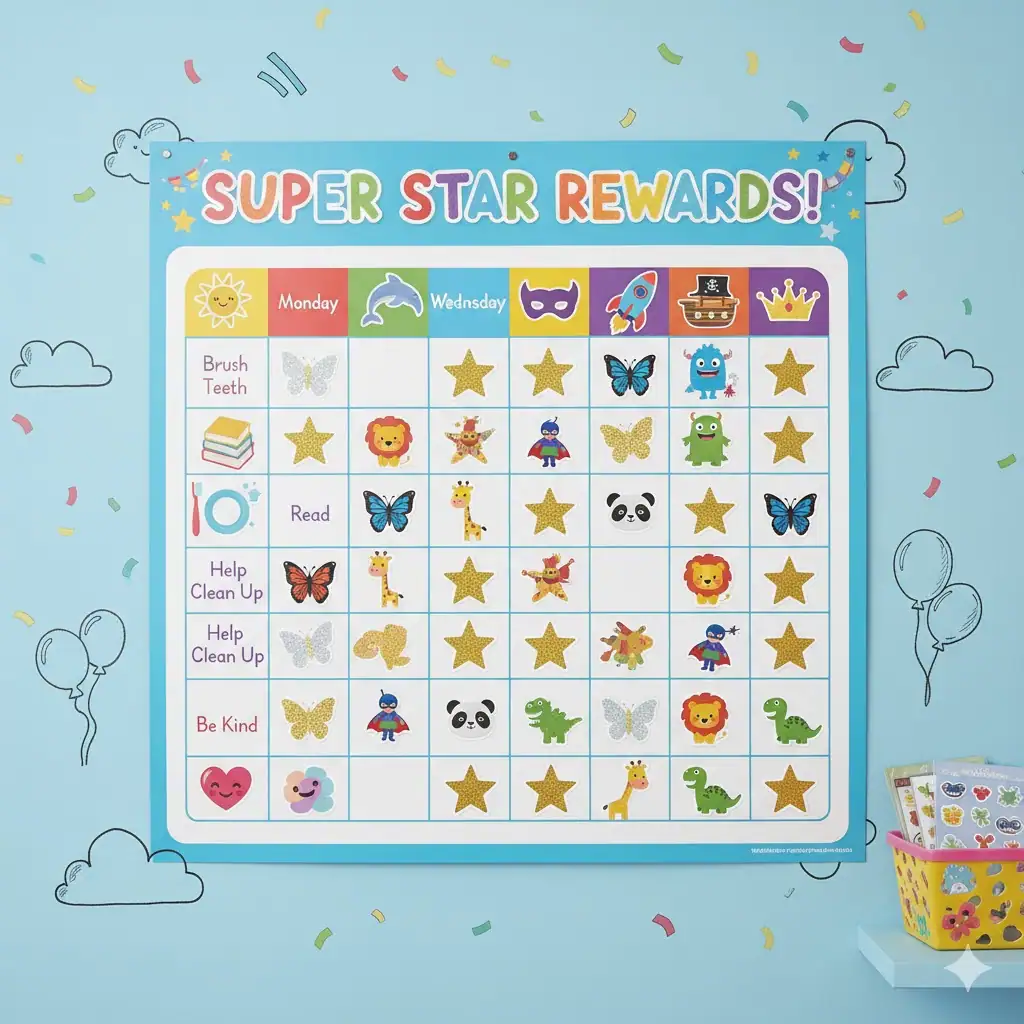
You can’t go wrong with a classic. Simple, colorful, and easy to track, this chart lets your child earn stickers for completing tasks like brushing teeth, tidying up, or finishing homework.
- Pros: Easy to understand, visually engaging, flexible.
- Cons: Might need more motivation for older kids.
- Tip: Pick stickers your kid actually loves—superheroes, unicorns, whatever keeps them hooked.
Honestly, I started with this one when my kid refused to put away toys. Two weeks later, no more toys on the floor (okay, mostly).
2. Magnetic Reward Chart
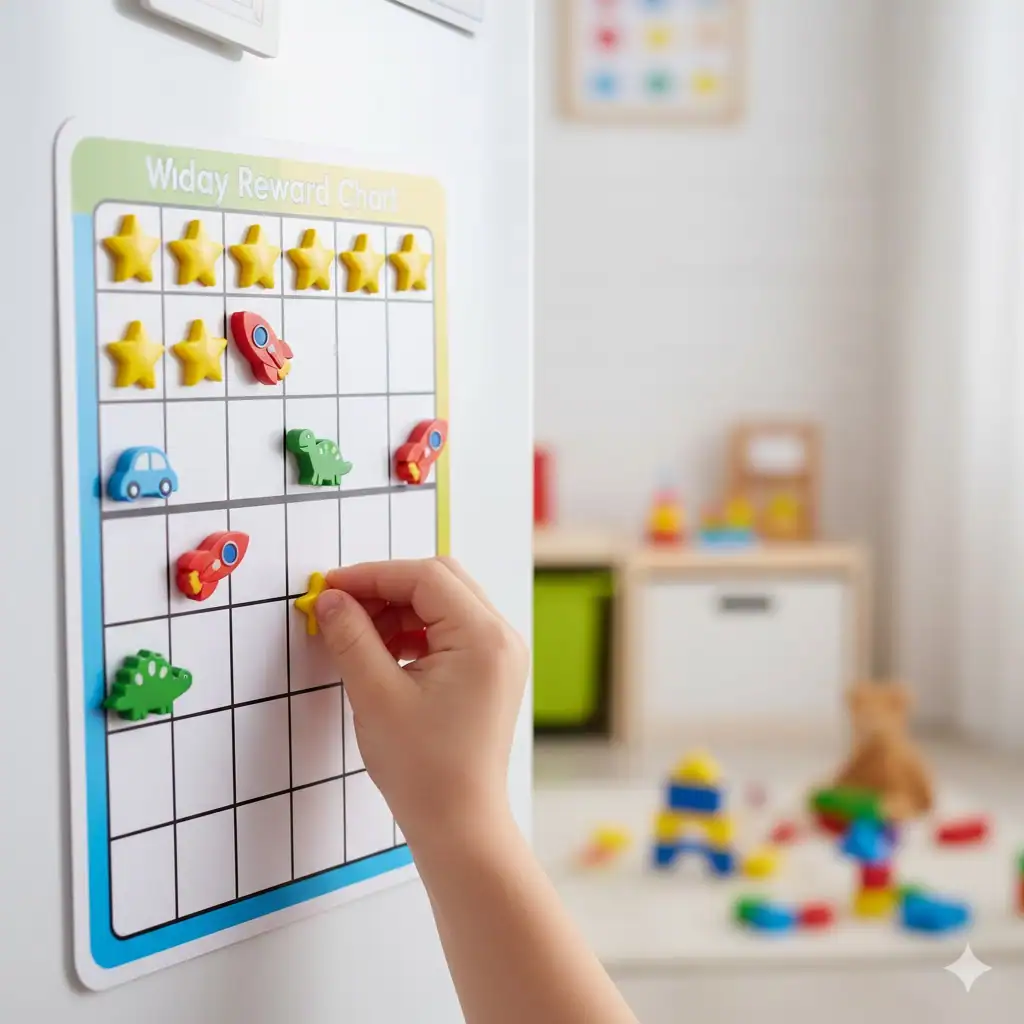
Magnetic charts are hands-on and interactive. Your kid physically moves magnets for each accomplishment. It’s tactile, which is perfect if your child likes “doing stuff” rather than just looking at a paper.
- Pros: Reusable, fun, interactive.
- Cons: Small pieces can get lost easily.
- Tip: Keep it at their eye level—they’ll love seeing progress every day.
3. Behavior Tracking Chart
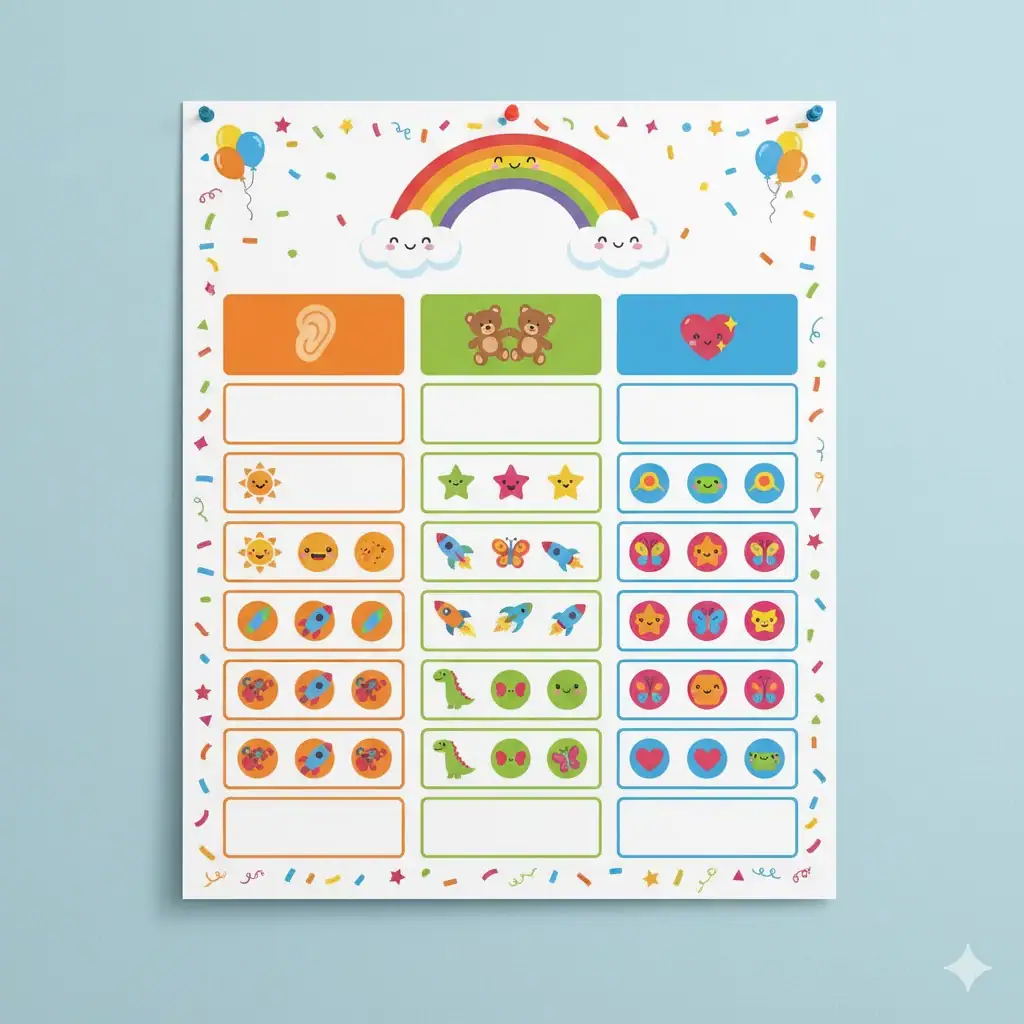
Not just for chores, this chart tracks specific behaviors, like listening, sharing, or being kind. Perfect if you’re working on long-term habits.
- Pros: Encourages positive social behavior.
- Cons: May take longer to show results than a sticker chart.
- Tip: Pair with small rewards to reinforce progress.
Ever tried explaining “good behavior” without a visual? Trust me, it’s like speaking Martian.
4. Chore Chart for Kids
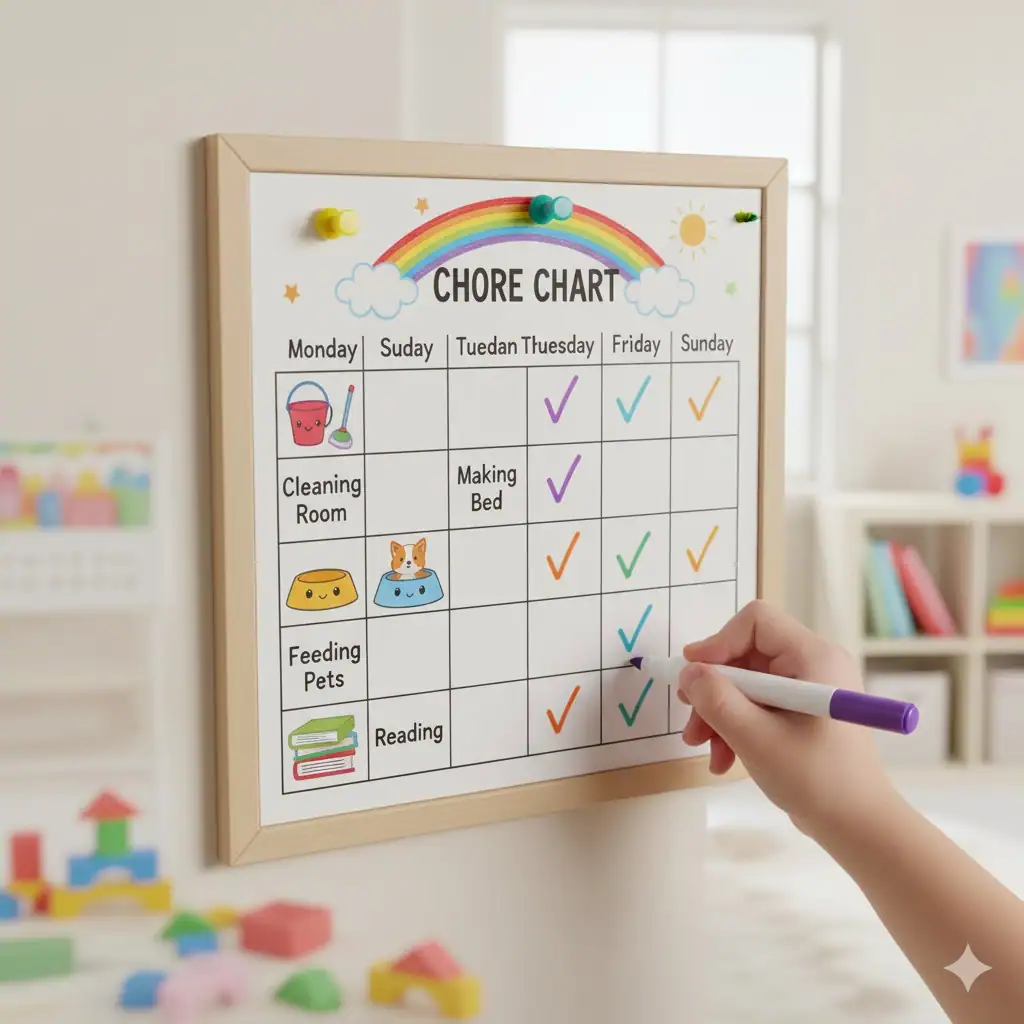
A chore chart is basically a game plan for cleaning your house without arguing. Assign points for each completed chore and let them cash in for rewards.
- Pros: Teaches responsibility, easy to customize.
- Cons: Some kids will try to game the system.
- Tip: Set realistic chores and include fun tasks—like feeding the pet or watering plants.
5. Daily Routine Reward Chart
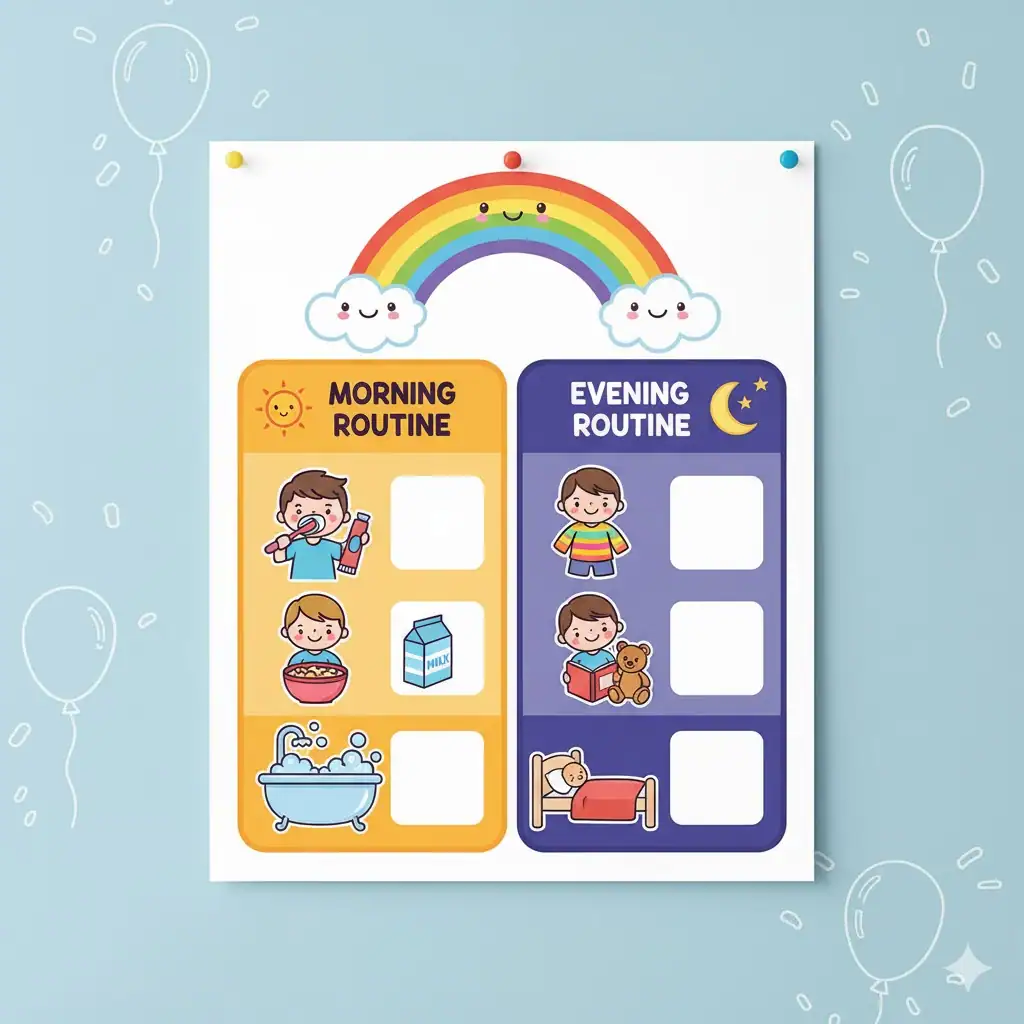
Consistency is key. A daily routine chart encourages kids to complete tasks like brushing teeth, making the bed, and getting dressed.
- Pros: Builds habits quickly.
- Cons: Needs daily reinforcement.
- Tip: Use bright colors and themes to make it appealing.
IMO, this is perfect for younger kids—anything that turns morning chaos into something manageable is a win.
6. Homework Reward Chart
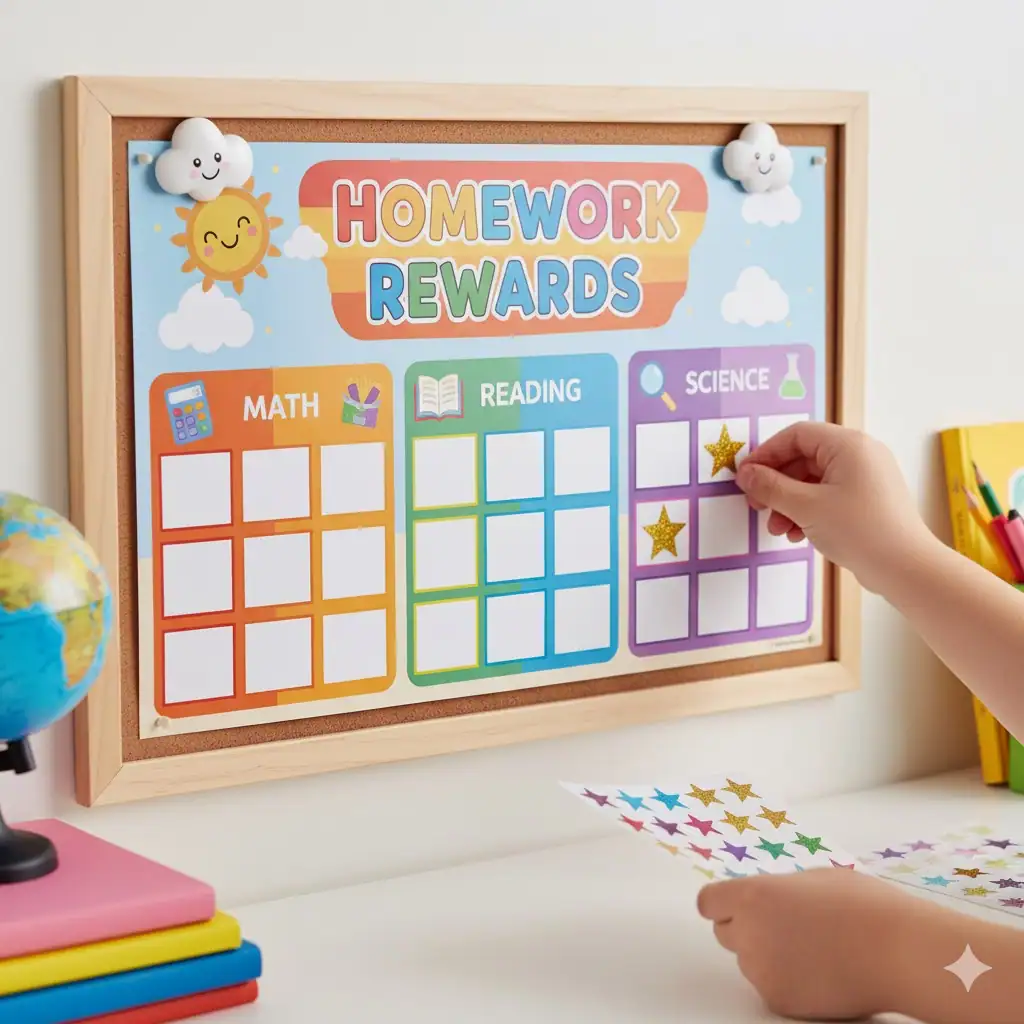
If homework battles feel like a WWE match in your living room, this chart is your secret weapon. Reward points for completed assignments, studying, or reading.
- Pros: Encourages academic responsibility.
- Cons: Some kids might need extra motivation.
- Tip: Keep rewards small but frequent for consistent progress.
7. Star Chart
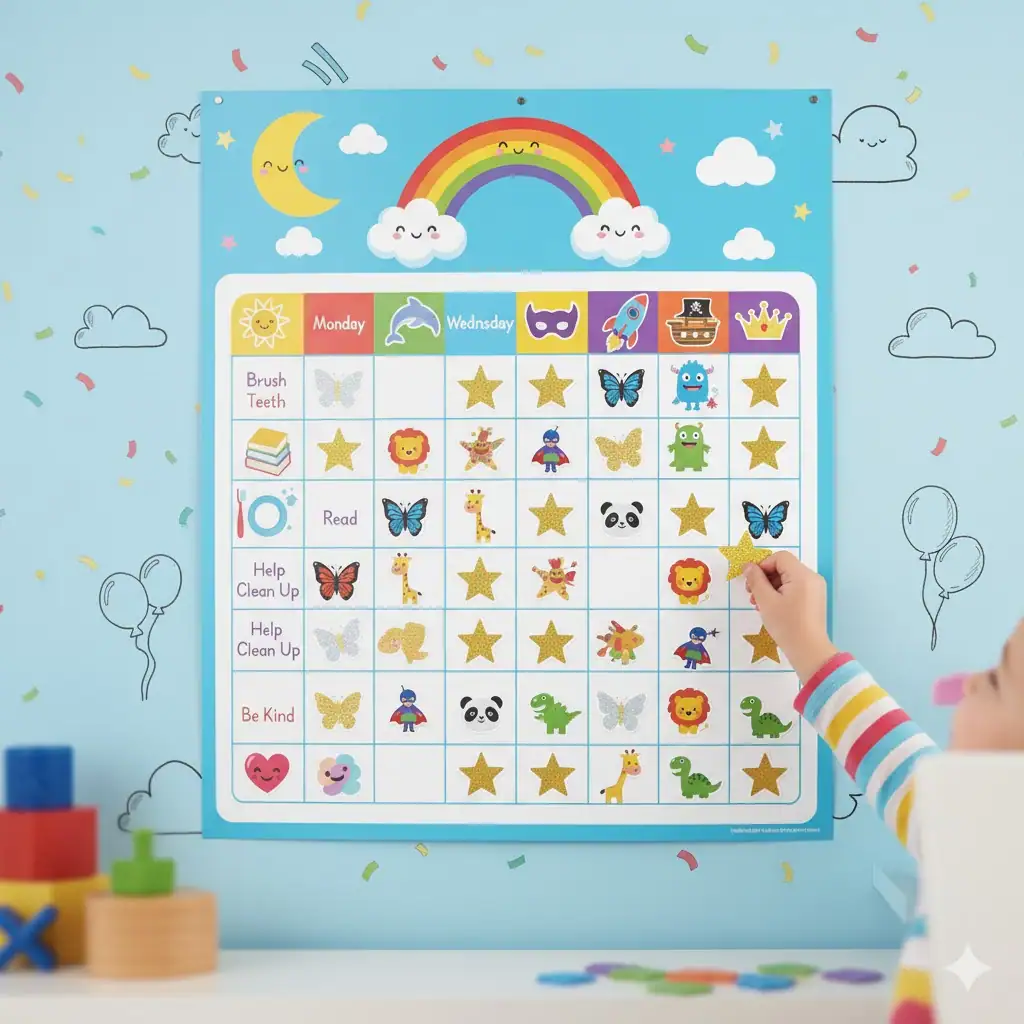
Ah, the classic star chart. Similar to stickers, but stars can feel extra “epic.” Kids love collecting them.
- Pros: Simple, satisfying, motivational.
- Cons: Can get repetitive if not updated.
- Tip: Occasionally add a “bonus star” day to keep excitement high.
8. Token Economy Chart
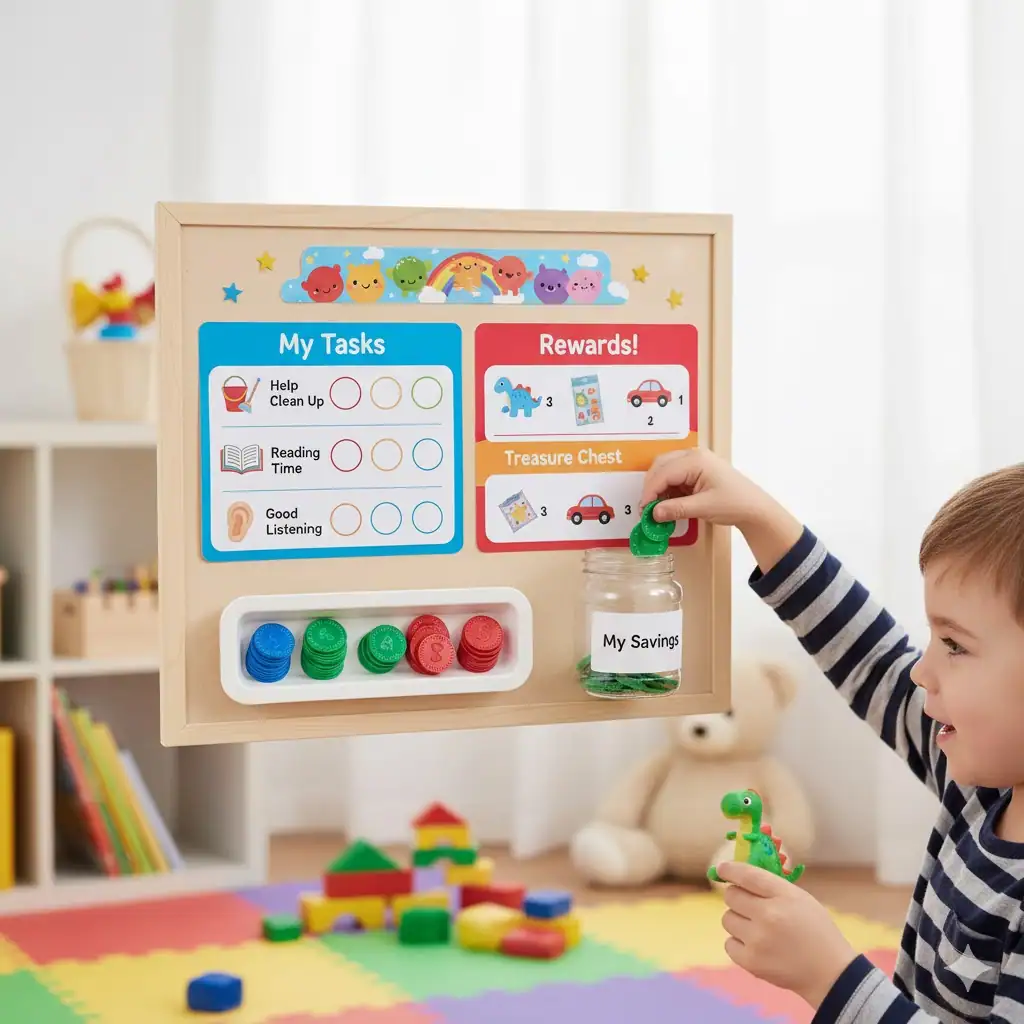
This one’s a bit more advanced but extremely effective. Kids earn tokens for completing tasks, which can later be exchanged for bigger rewards.
- Pros: Teaches delayed gratification, versatile.
- Cons: Requires keeping track of tokens.
- Tip: Make tokens fun—coins, poker chips, or custom cards.
9. Digital Reward Chart
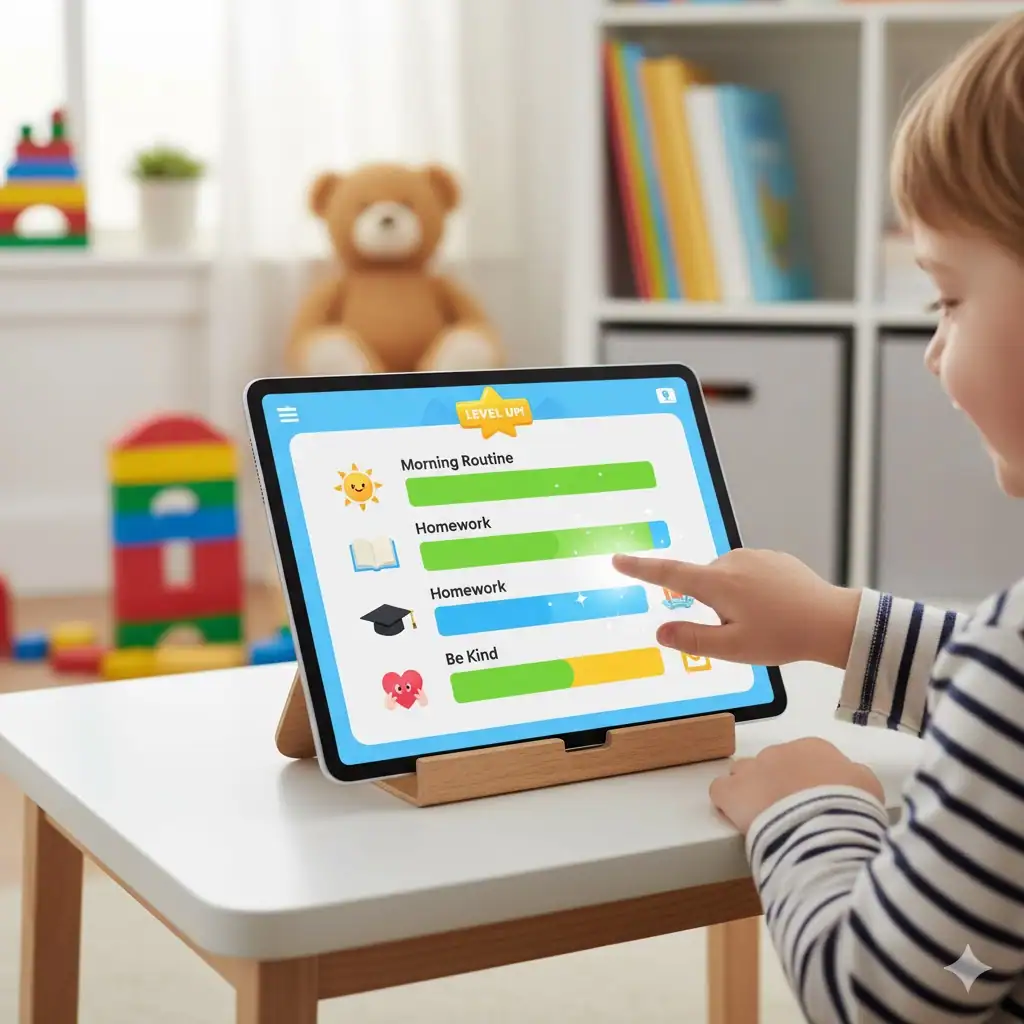
We live in the digital age, so why not use apps? Some apps let kids log achievements and track progress visually.
- Pros: Interactive, gamified, appealing to older kids.
- Cons: Screen time concerns.
- Tip: Limit app usage to rewards tracking only.
10. Visual Progress Bar Chart
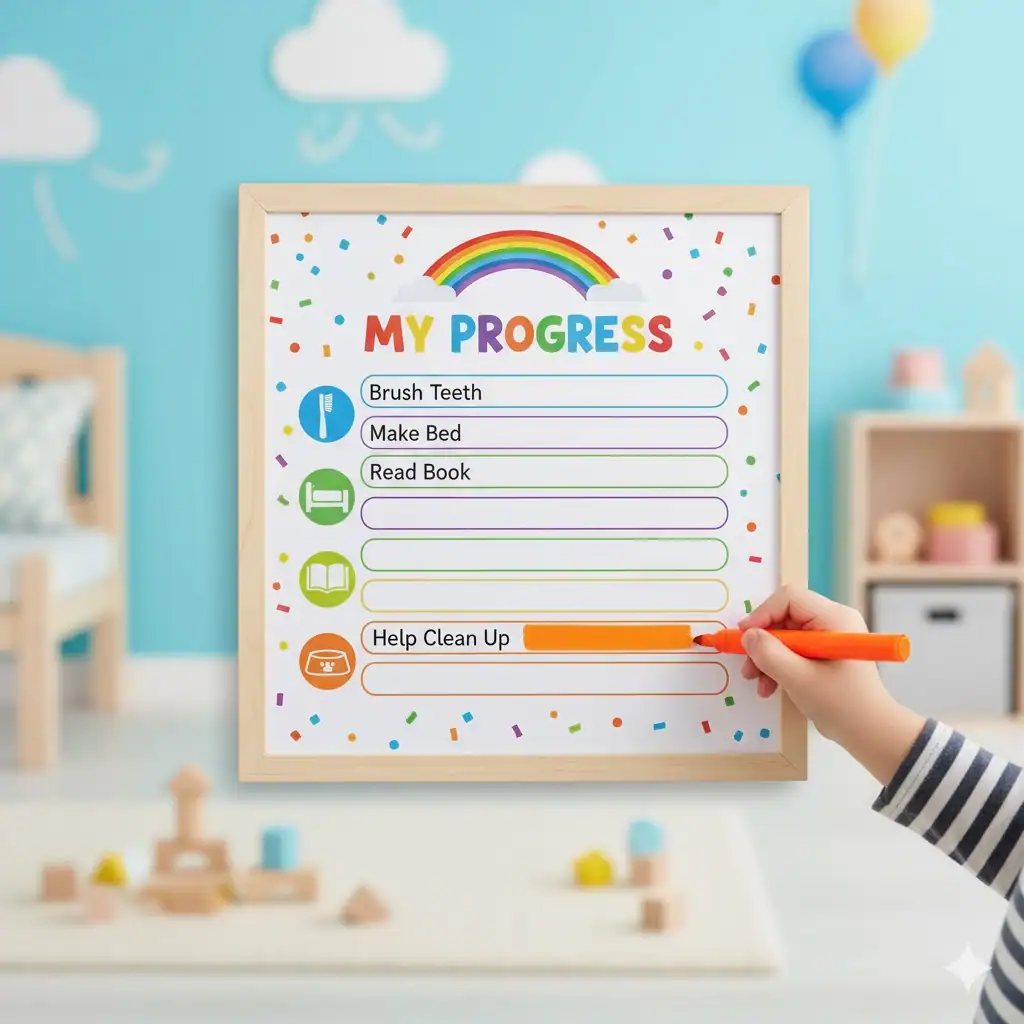
Instead of stars or stickers, a progress bar shows completion visually. Great for kids who respond to measurable goals.
- Pros: Clear goals, highly motivating.
- Cons: Needs daily monitoring.
- Tip: Use fun colors and markers to fill the bars.
Ever seen a kid get obsessed with filling in a color bar? Priceless.
11. Weekly Reward Chart
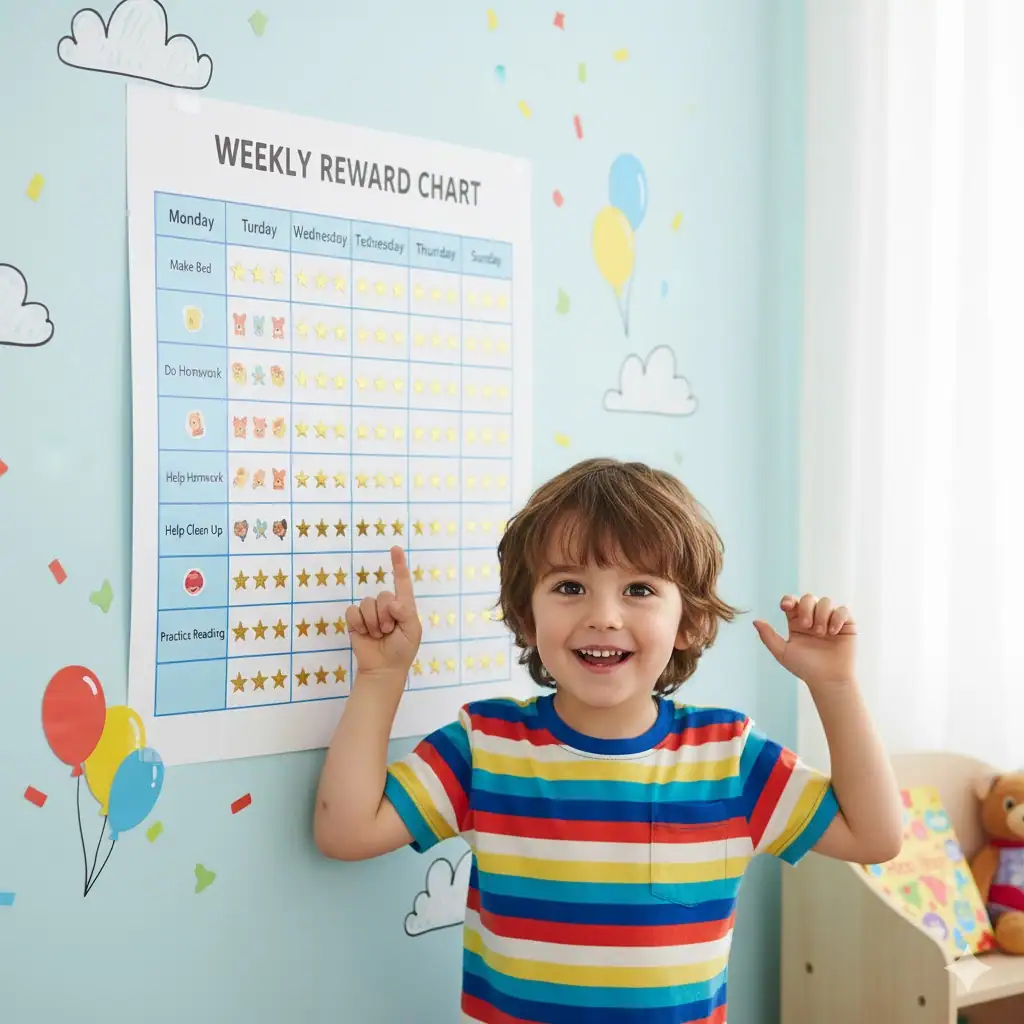
A weekly chart focuses on longer-term goals. Complete tasks throughout the week to earn a bigger weekend reward.
- Pros: Encourages consistency, teaches planning.
- Cons: Not ideal for kids who need instant rewards.
- Tip: Make weekend rewards exciting—like choosing a family activity or small toy.
12. Customized Reward Chart
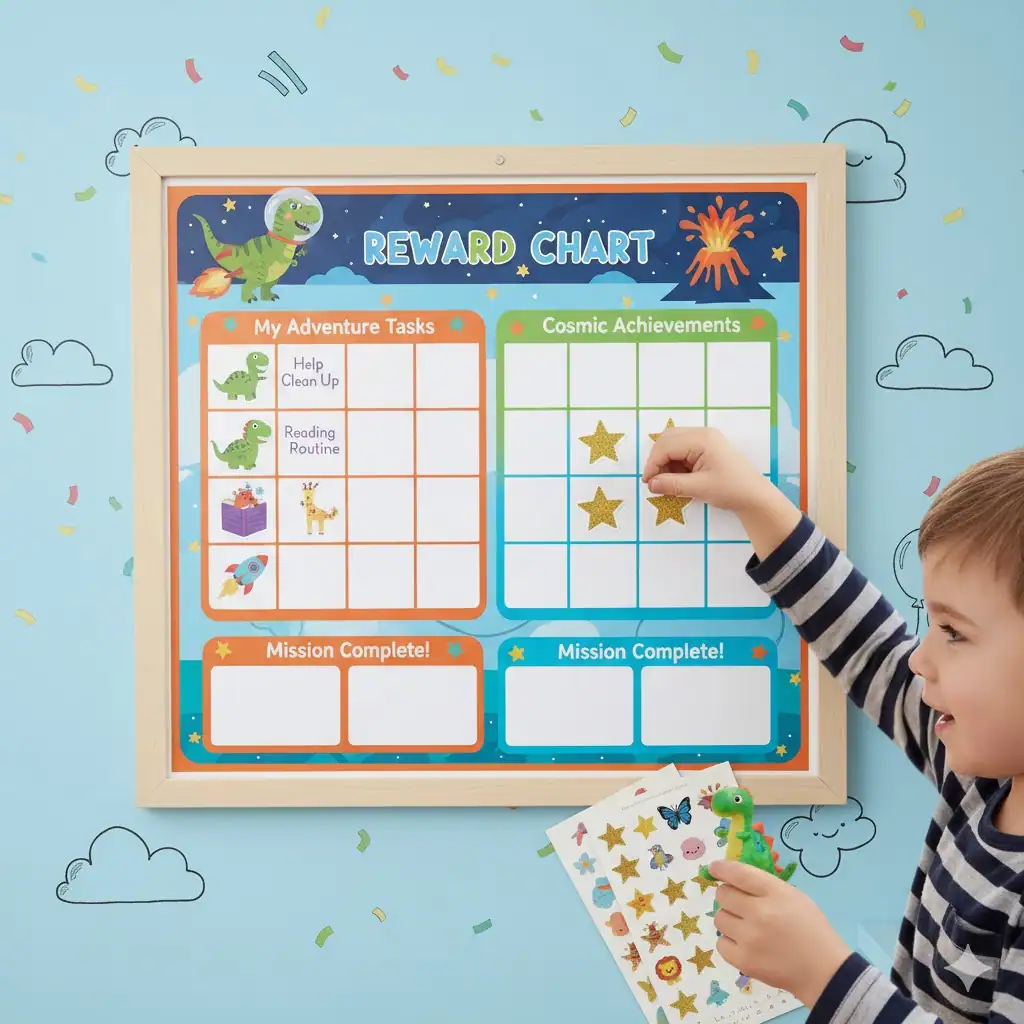
Make it personalized for your child’s interests—dinosaurs, princesses, space rockets, or whatever they’re obsessed with this week.
- Pros: Engaging, highly motivating.
- Cons: Requires effort to customize.
- Tip: Let your kid help design it—they’ll feel ownership and pride.
13. Responsibility Ladder Chart
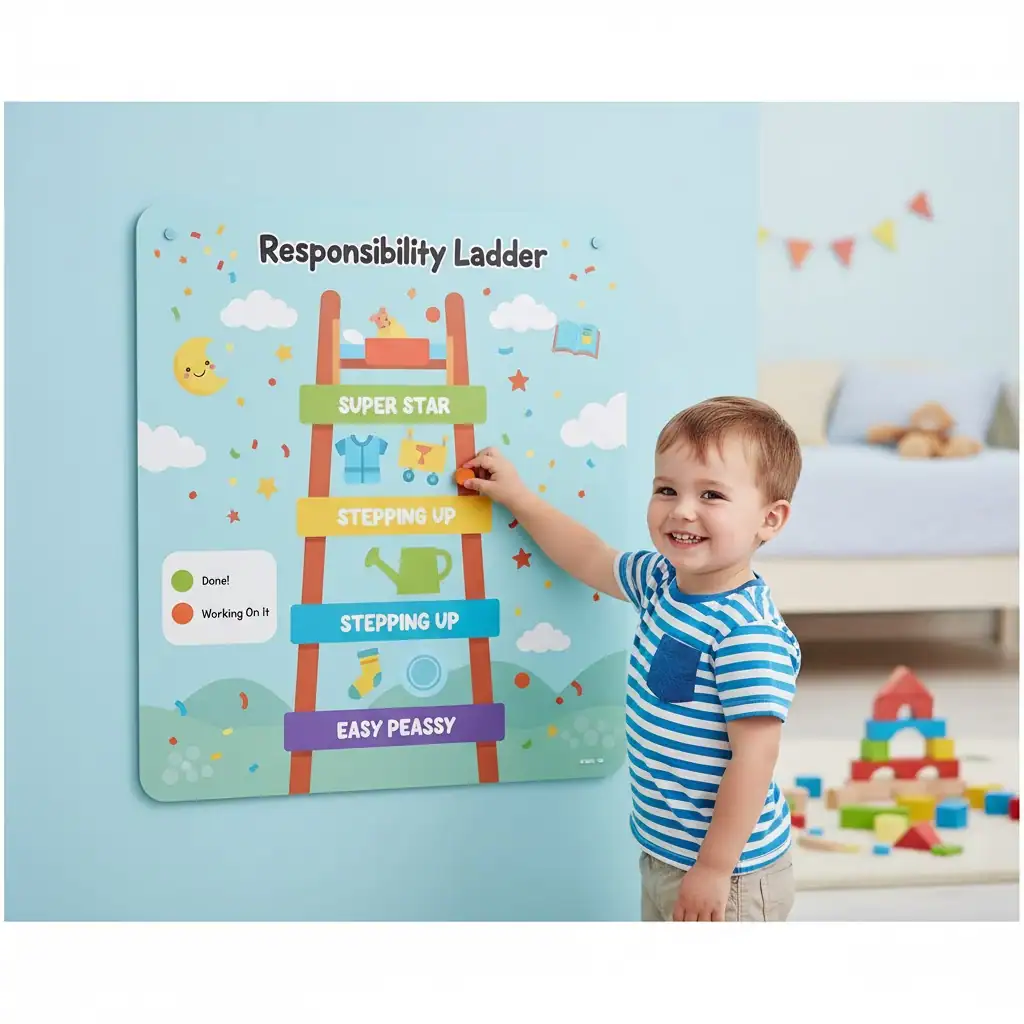
This chart ranks tasks by difficulty. Complete easier tasks to climb the ladder toward bigger rewards.
- Pros: Teaches goal setting, builds responsibility gradually.
- Cons: Some kids may rush through easy tasks for quick rewards.
- Tip: Encourage quality over quantity.
14. Chore Jar
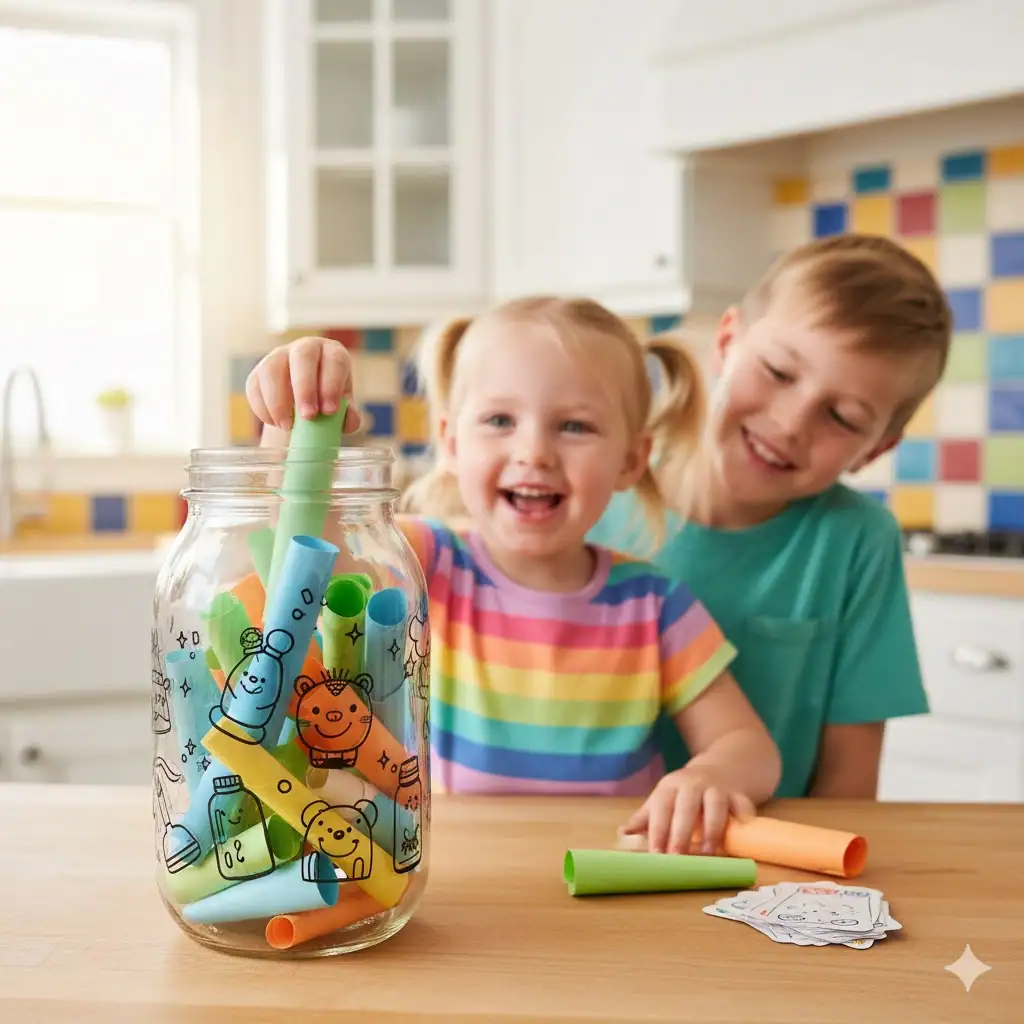
Think of it like a lottery. Kids pick a chore from a jar, complete it, and earn points. Adds element of surprise and keeps things fresh.
- Pros: Fun, interactive, flexible.
- Cons: Might require frequent updates to the jar.
- Tip: Rotate chores weekly to prevent boredom.
15. Behavior Bingo Chart
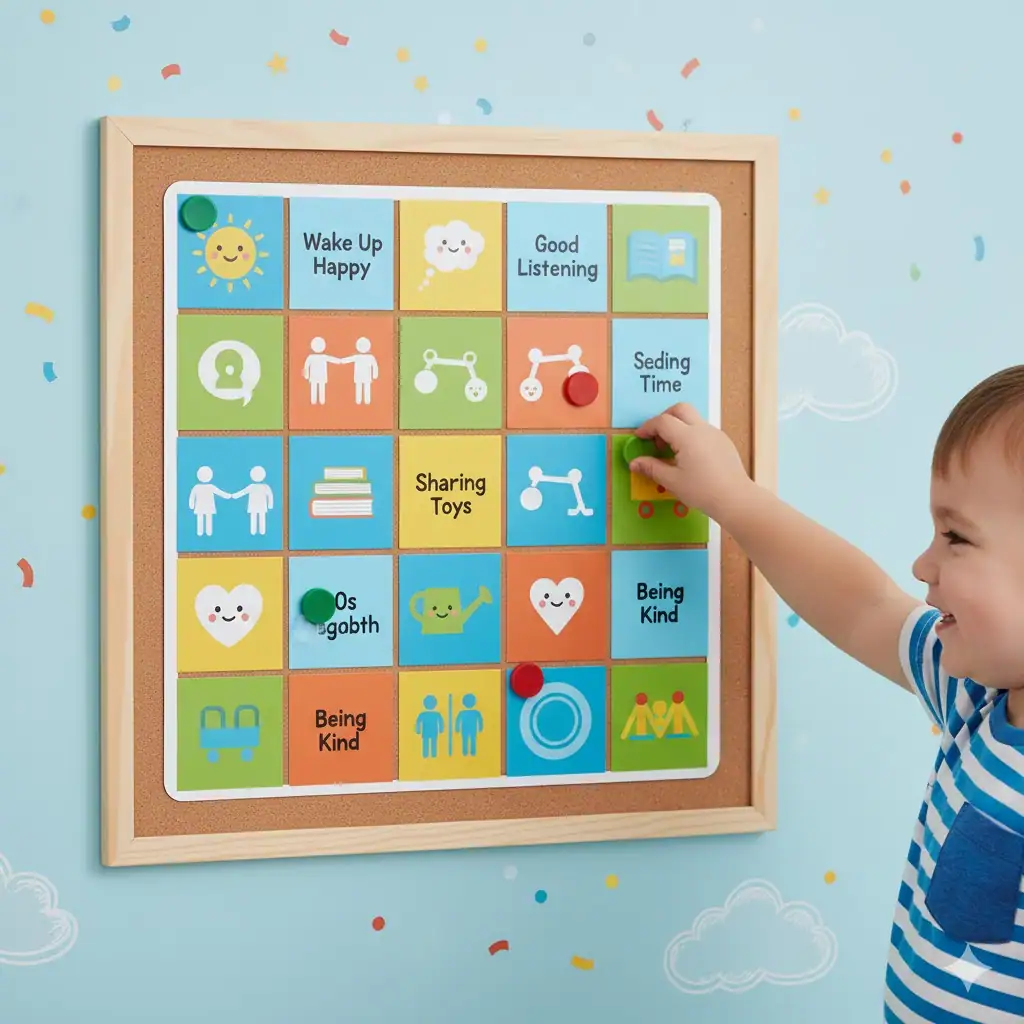
Yes, bingo isn’t just for grandma! Create a bingo-style chart where completing tasks or behaviors fills squares. First to bingo gets a reward.
- Pros: Super fun, competitive in a healthy way.
- Cons: Might be tricky for very young kids.
- Tip: Keep it colorful and visually exciting.
Bonus Tips for Making Reward Charts Actually Work
Let’s be honest—charts alone don’t magically fix everything. Here’s how to make them effective:
- Keep it visible: Kids need to see it every day.
- Set realistic goals: Don’t expect a 3-year-old to clean their room perfectly.
- Be consistent: Rewards only work if you follow through.
- Celebrate wins: High-five, hug, or extra playtime—whatever makes them feel accomplished.
- Adjust as needed: Kids grow, interests change—update your charts accordingly.
Conclusion
Reward charts for kids aren’t just cute paper or colorful stickers—they’re tools that can dramatically improve behavior, responsibility, and habits. From classic sticker charts to digital apps and even behavior bingo, there’s a system for every kid (and sanity level).
So, which one should you try first? My advice: start simple, have fun with it, and watch your kids light up when they earn those well-deserved stars, stickers, or tokens. And if nothing else, at least you get a tiny sense of victory in the chaotic battlefield called parenting. 😉