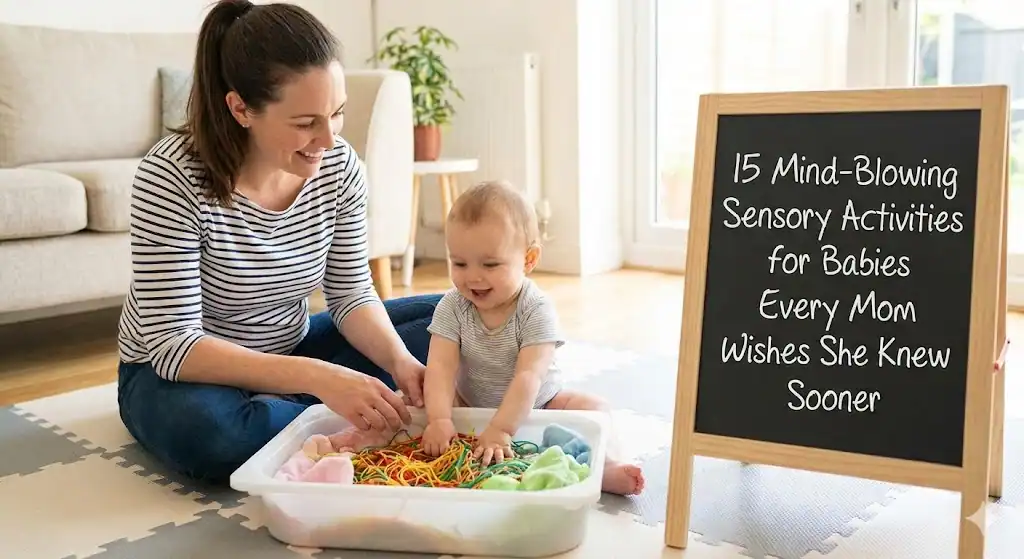

Let’s be real — if you’ve got a toddler or preschooler at home, you already know what “constant entertainment mode” feels like. You pour your morning coffee, blink once, and boom — your kid’s bored, your living room’s a war zone, and you’re rethinking all your life choices. 😅
That’s where sensory bins come in. These magical little setups aren’t just fun; they’re sanity-savers. Sensory bin ideas let kids explore, learn, and stay busy — all while you finally drink that coffee while it’s still hot. (Imagine that!)
I’ve been using sensory bins with my own little chaos tornado for years, and trust me, they’re pure gold. So, grab your storage containers, a few basic supplies, and get ready — because here are 15 genius sensory bin ideas that’ll keep your little ones entertained for hours (and make you look like a Pinterest parent without even trying).
1. The Classic Rice Bin — Simple but Magical
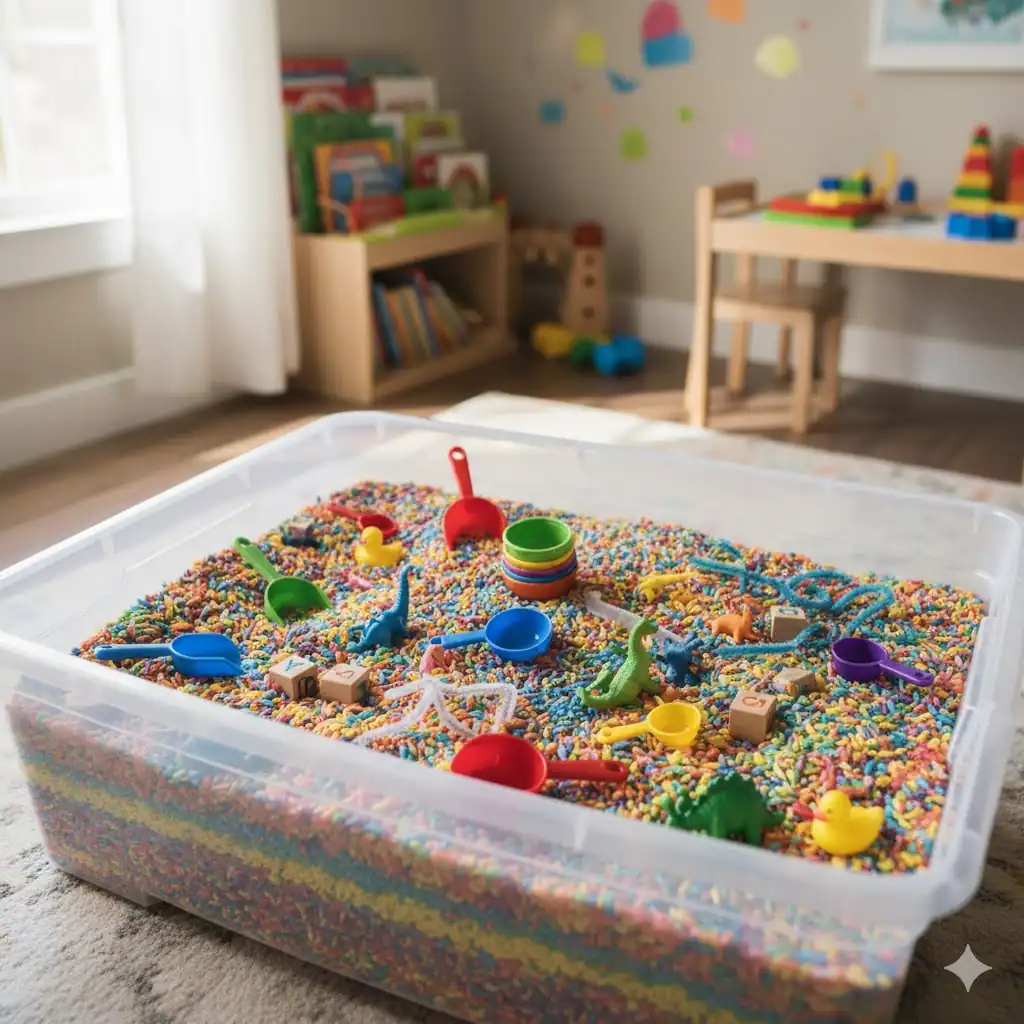
If you’re new to sensory play, start here. Uncooked rice is the OG sensory filler — cheap, easy, and oddly satisfying.
- What you’ll need:
- A large plastic bin (the under-bed ones work great)
- Uncooked rice (white, brown, or rainbow-colored if you’re feeling extra)
- Scoops, spoons, cups, or little containers
- Small toys or figurines to hide inside
Pro tip: Add a few drops of food coloring to rice in a ziplock bag with vinegar or rubbing alcohol. Shake it up, let it dry, and boom — rainbow rice that looks like a party.
Why it’s awesome: It encourages fine motor skills and keeps kids quietly focused. Ever seen a toddler scoop rice for 45 minutes straight? It’s mesmerizing.
2. Ocean Adventure Bin — For Little Explorers
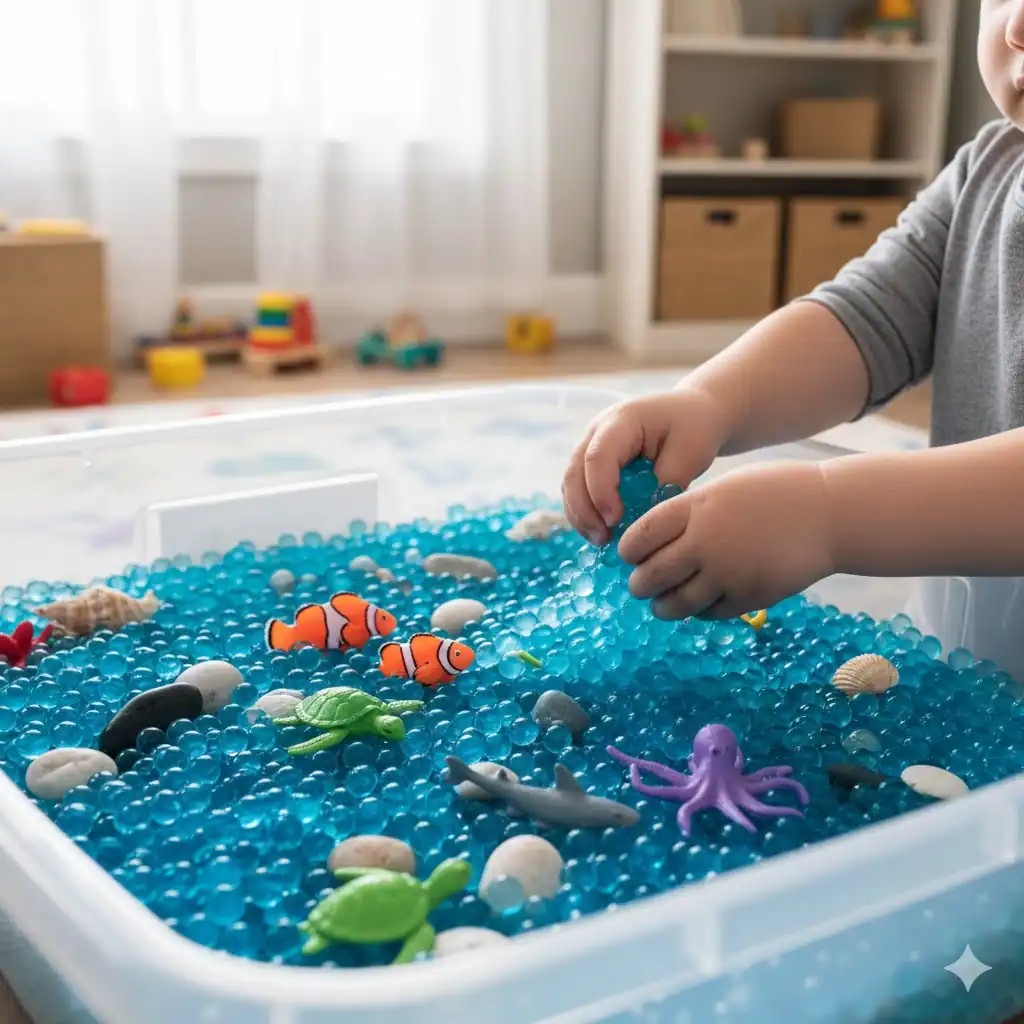
Kids love the ocean (and let’s be honest, pretending to be marine biologists sounds cooler than cleaning the house).
- You’ll need:
- Blue-tinted water or blue water beads
- Plastic sea animals (sharks, turtles, fish)
- Seashells or pebbles
- A few drops of ocean-scented essential oil (optional)
Bonus idea: Freeze small ocean animals in ice cubes and let your kids “rescue” them with warm water and droppers. Instant science experiment + fun!
Why it works: The tactile experience of water and beads calms kids while fueling their imagination.
3. Construction Site Bin — For Your Little Builder
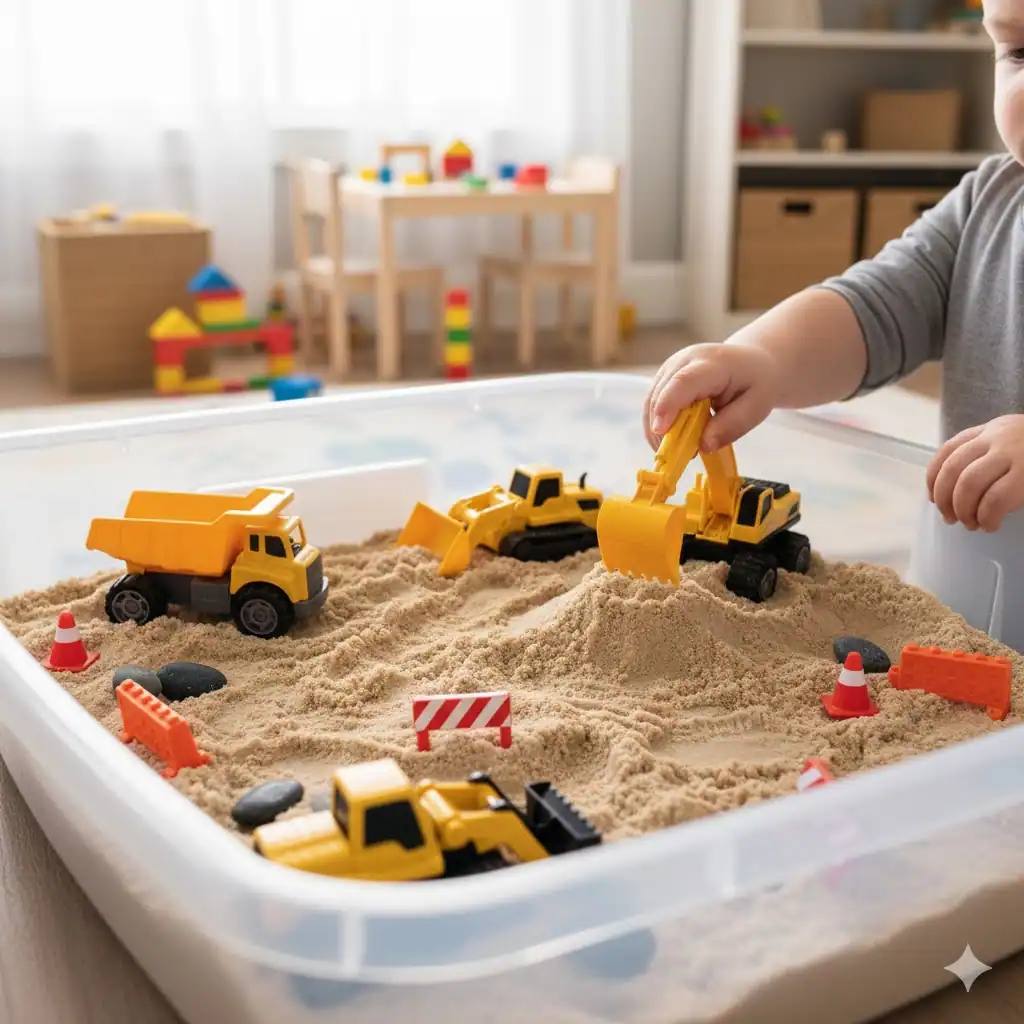
If your kiddo loves dump trucks and bulldozers, this one’s a winner.
- What you’ll need:
- Kinetic sand or dry oats
- Small construction vehicles
- Rocks or pebbles
- Mini cones or small wooden blocks
Let them dig, scoop, and “build roads.” It’s messy, yes, but the kind of mess that feels productive (and IMO, that’s the best kind).
Why it’s genius: It builds hand-eye coordination and gives them hours of “work time” — while you catch a breather.
4. Arctic Ice Bin — Cool Science Meets Fun
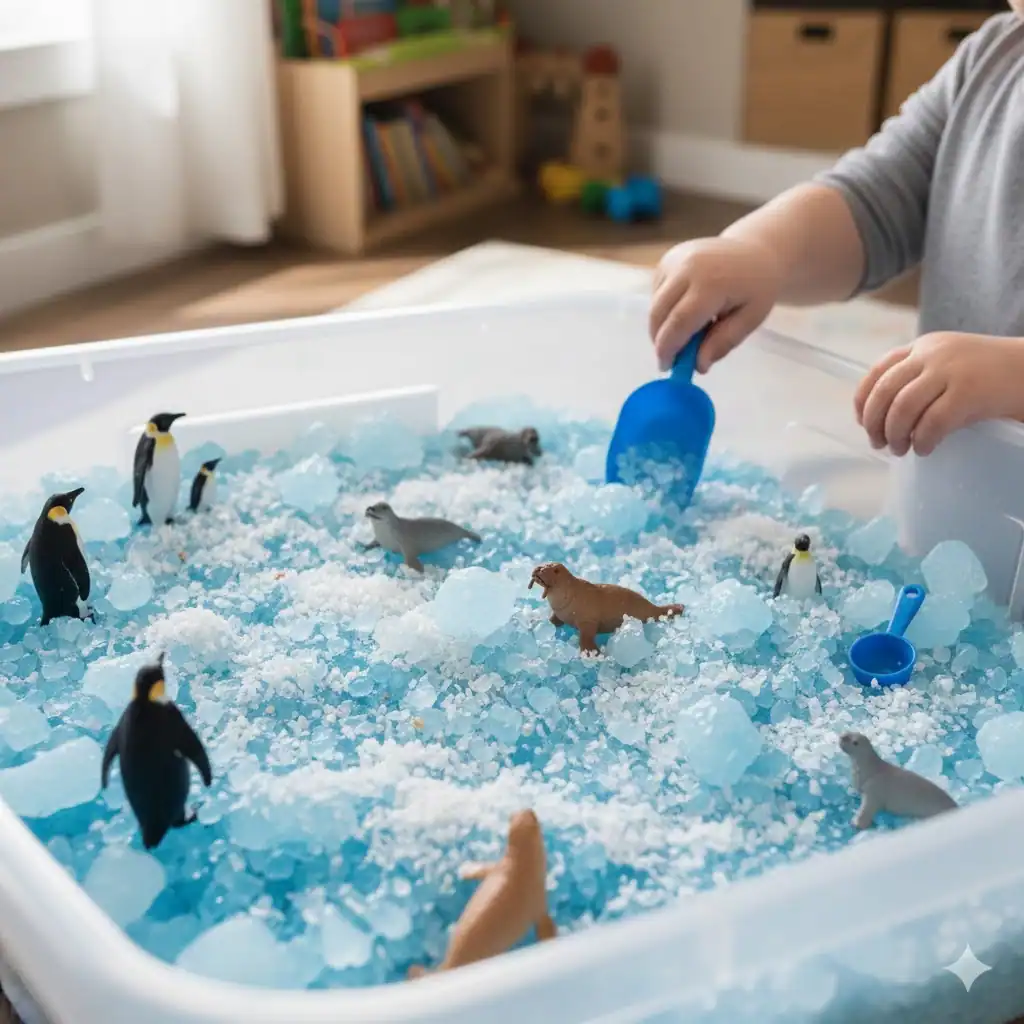
Perfect for hot days!
- You’ll need:
- Ice cubes or crushed ice
- Small polar animals (penguins, seals, polar bears)
- Blue food coloring
- Salt and spoons
Let kids pour salt over the ice to make it melt faster, then “rescue” the frozen animals.
Bonus tip: If you want less mess, do it in the bathtub — it’s 100% cleanup-friendly. 🙂
5. Farm Sensory Bin — A Mini Barnyard at Home
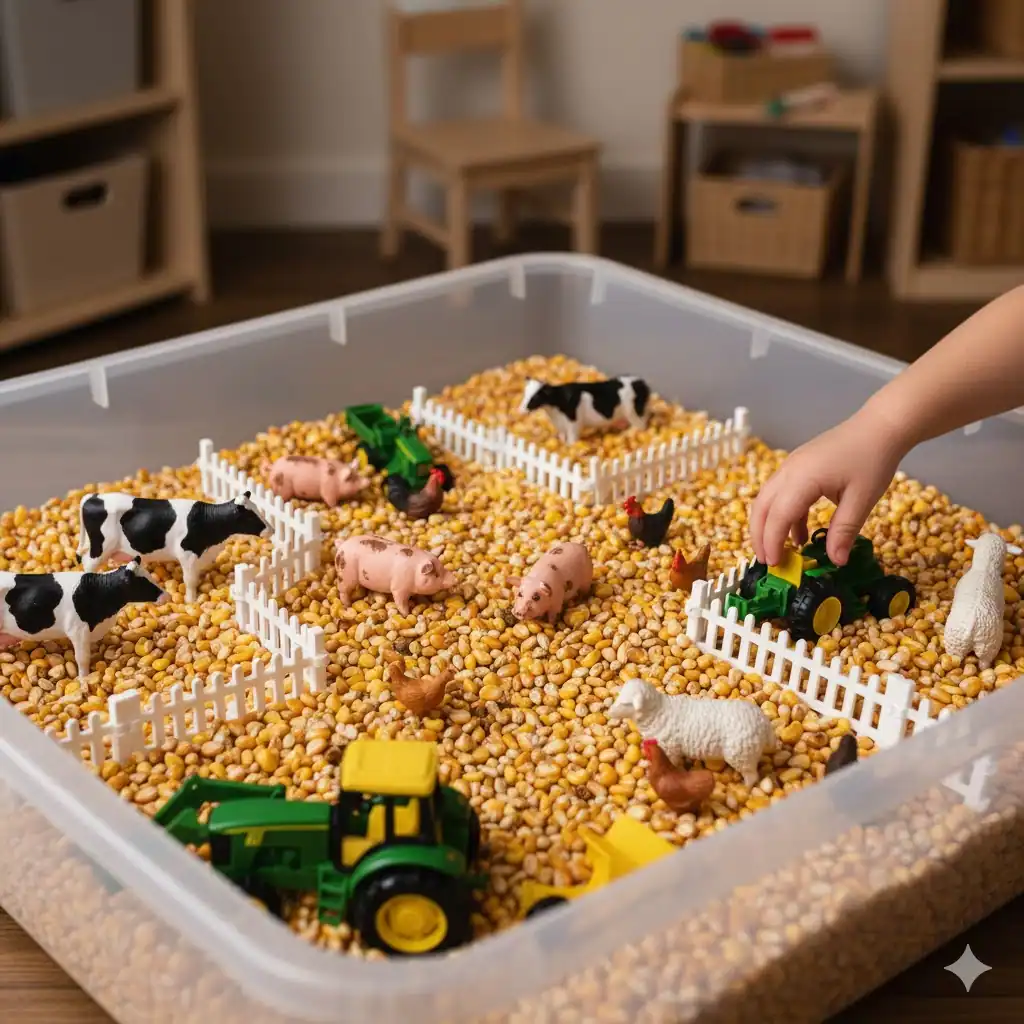
Because what kid doesn’t love animals that go “moo” and “oink”?
- You’ll need:
- Dry beans or corn kernels
- Toy farm animals
- Mini fences or tractors
- Fake grass or hay (optional)
Let your kids pretend to feed animals, scoop beans, and run a mini farm.
Why it rocks: It teaches animal recognition, encourages storytelling, and is an instant hit with any toddler.
6. Color Sorting Bin — Sneaky Learning That Feels Like Play
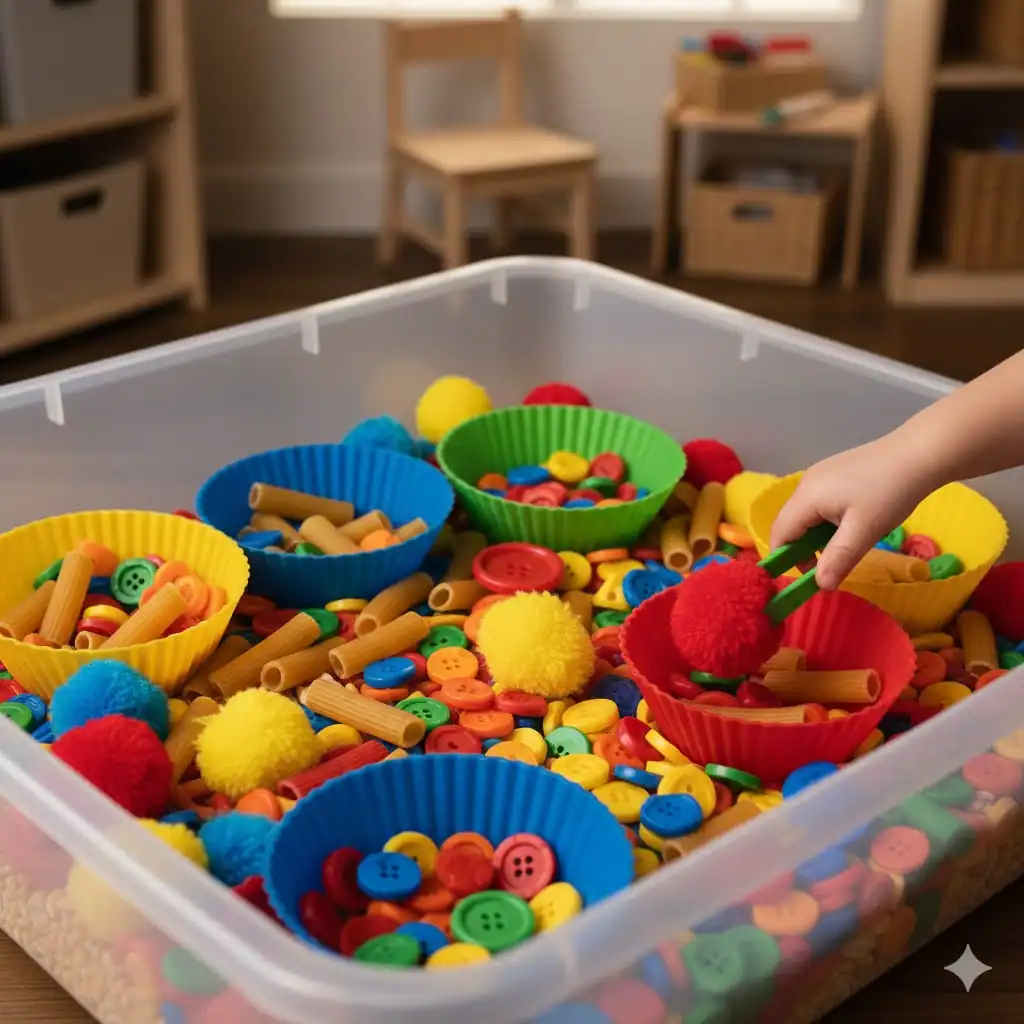
Want your child to learn colors without the boredom of flashcards? This one’s for you.
- You’ll need:
- Dyed pasta, pom-poms, or buttons in various colors
- Small cups or muffin tins for sorting
- Tongs or spoons
Ask your kiddo to match and sort by color. They’ll think they’re just playing, but you’ll know they’re developing critical color recognition and motor control.
7. Dinosaur Dig Bin — Because Dinosaurs Never Go Out of Style
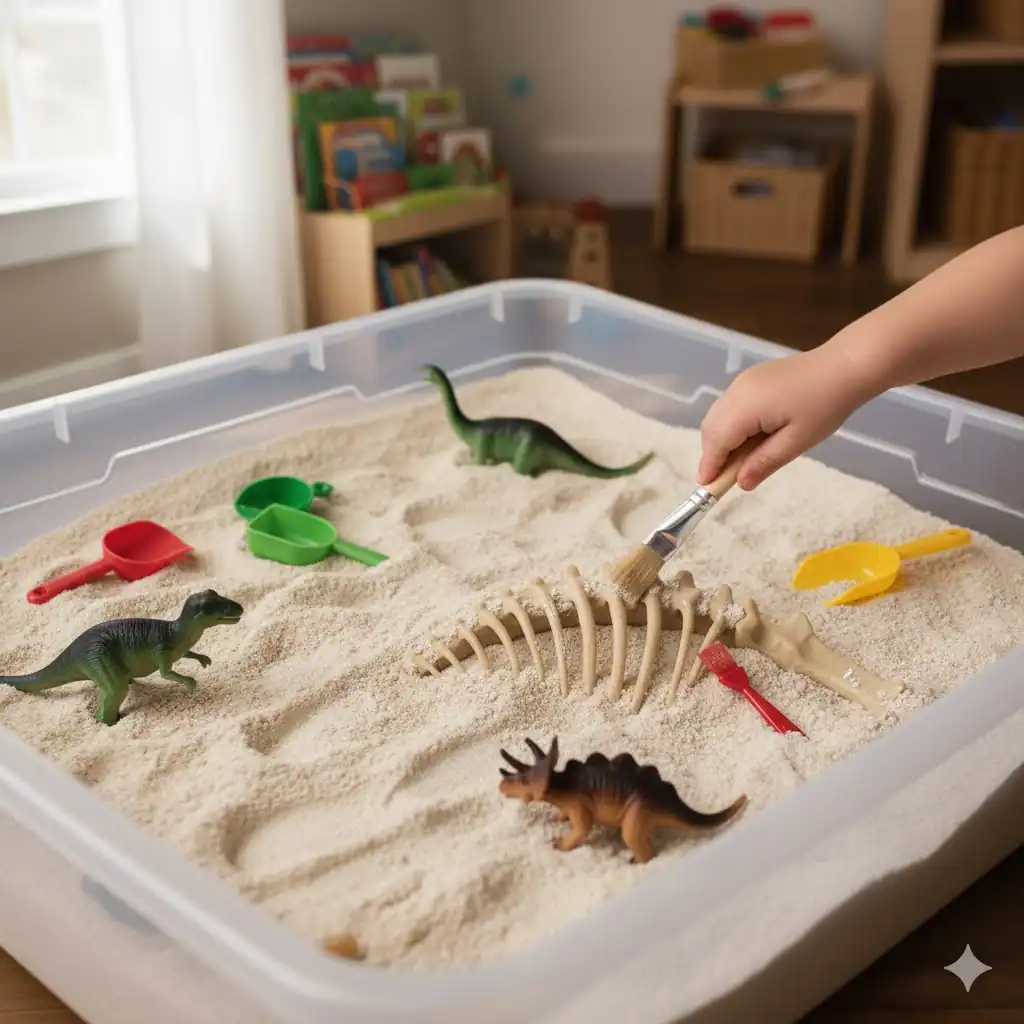
Honestly, dinosaurs make everything better.
- What you’ll need:
- Kinetic sand, coffee grounds, or dirt
- Plastic dinosaurs
- Paintbrushes and small shovels
Let your kids “excavate” fossils and bones like little paleontologists.
Why it’s fun: It mixes science play with imagination — and yes, you’ll probably want to join in (don’t fight it).
8. Cloud Dough Bin — Soft, Squishy Bliss
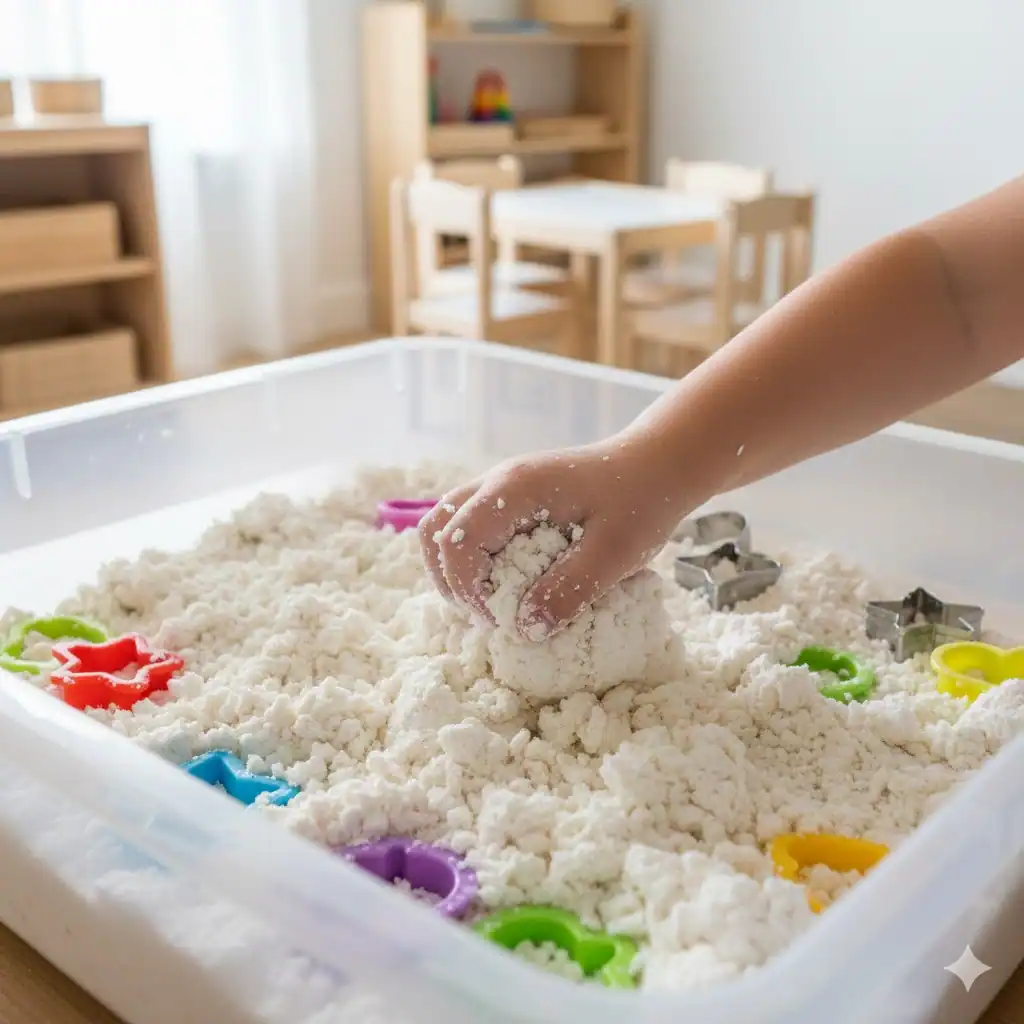
Warning: This one’s addictive — for kids and adults.
- You’ll need:
- 2 cups flour
- ¼ cup baby oil (or vegetable oil)
Mix it up until it feels soft and crumbly. Add small molds or cookie cutters and let them create shapes.
Pro tip: Store it in an airtight container and it lasts for weeks.
Why it’s awesome: Cloud dough builds tactile exploration and smells amazing (especially if you use scented oil).
9. Nature Exploration Bin — Bring the Outdoors Inside
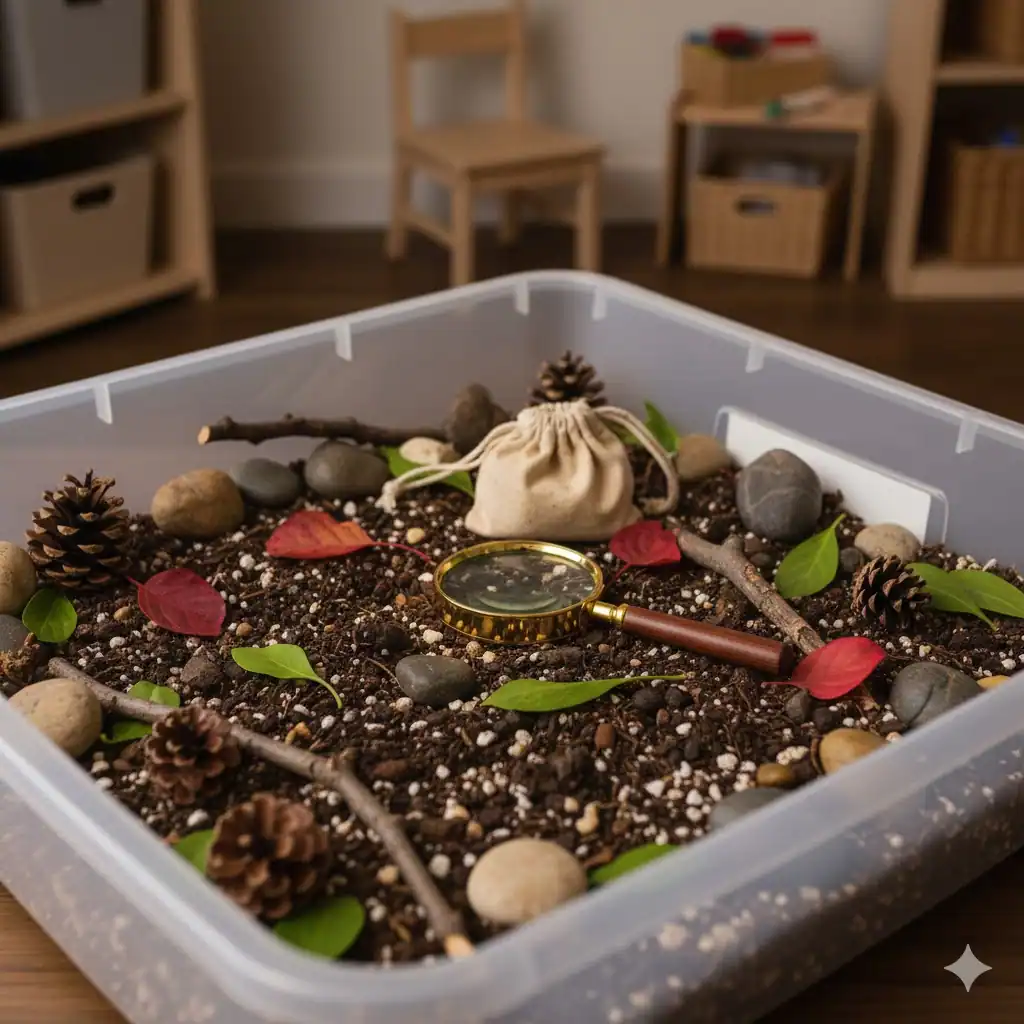
Perfect for days when you can’t go outside but still want nature vibes.
- You’ll need:
- Leaves, pinecones, twigs, rocks
- Magnifying glass or small bug toys
- Plastic containers or tweezers
Encourage your child to describe textures, colors, and shapes.
Why it works: It connects kids to nature and boosts sensory awareness — all without stepping outside.
10. Rainbow Pasta Bin — Because Bright Colors = Happy Kids
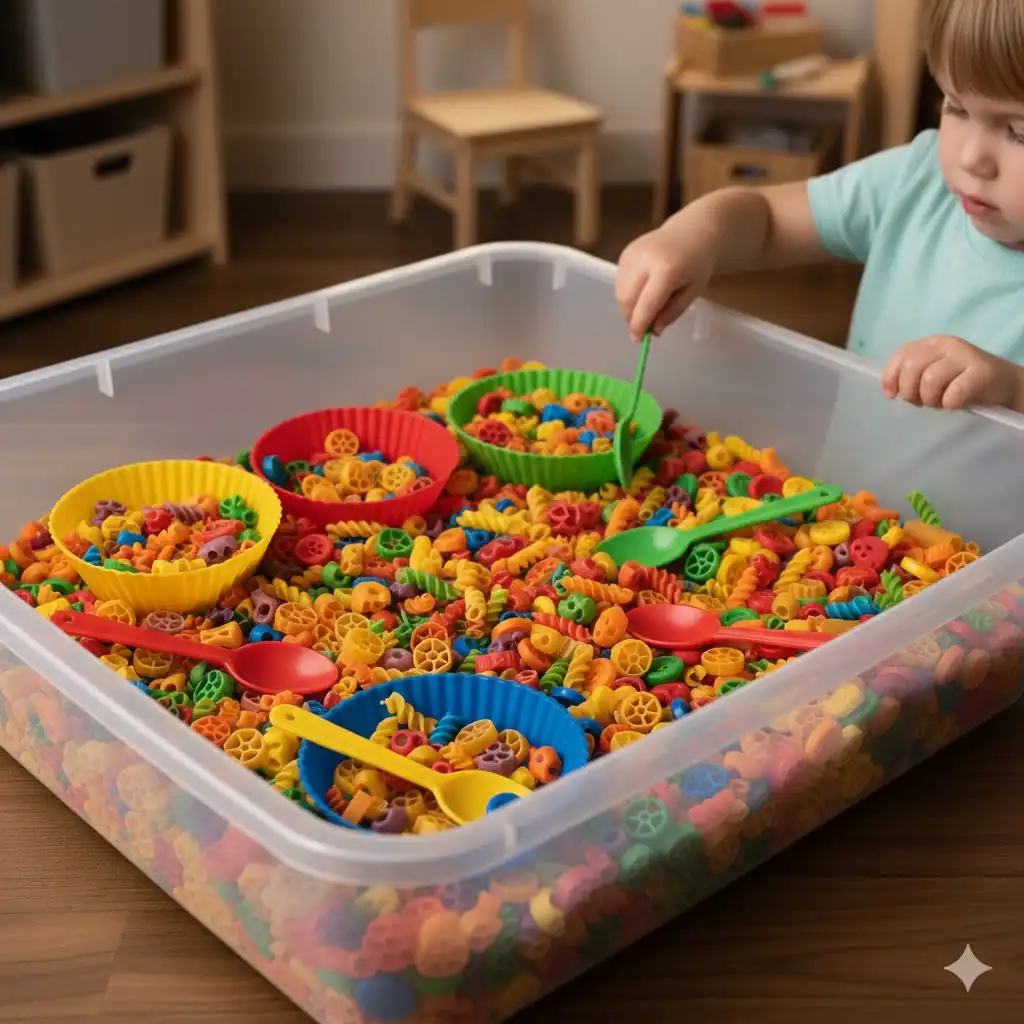
This one’s as beautiful as it is fun.
- You’ll need:
- Cooked pasta (dyed with food coloring)
- Olive oil (to prevent stickiness)
- Cups, spoons, and kitchen utensils
Let kids squish, scoop, and mix colors. Sensory heaven!
Bonus: The pasta is technically edible — great for younger toddlers who still taste-test everything.
11. Alphabet Treasure Hunt Bin — Learning Disguised as Fun
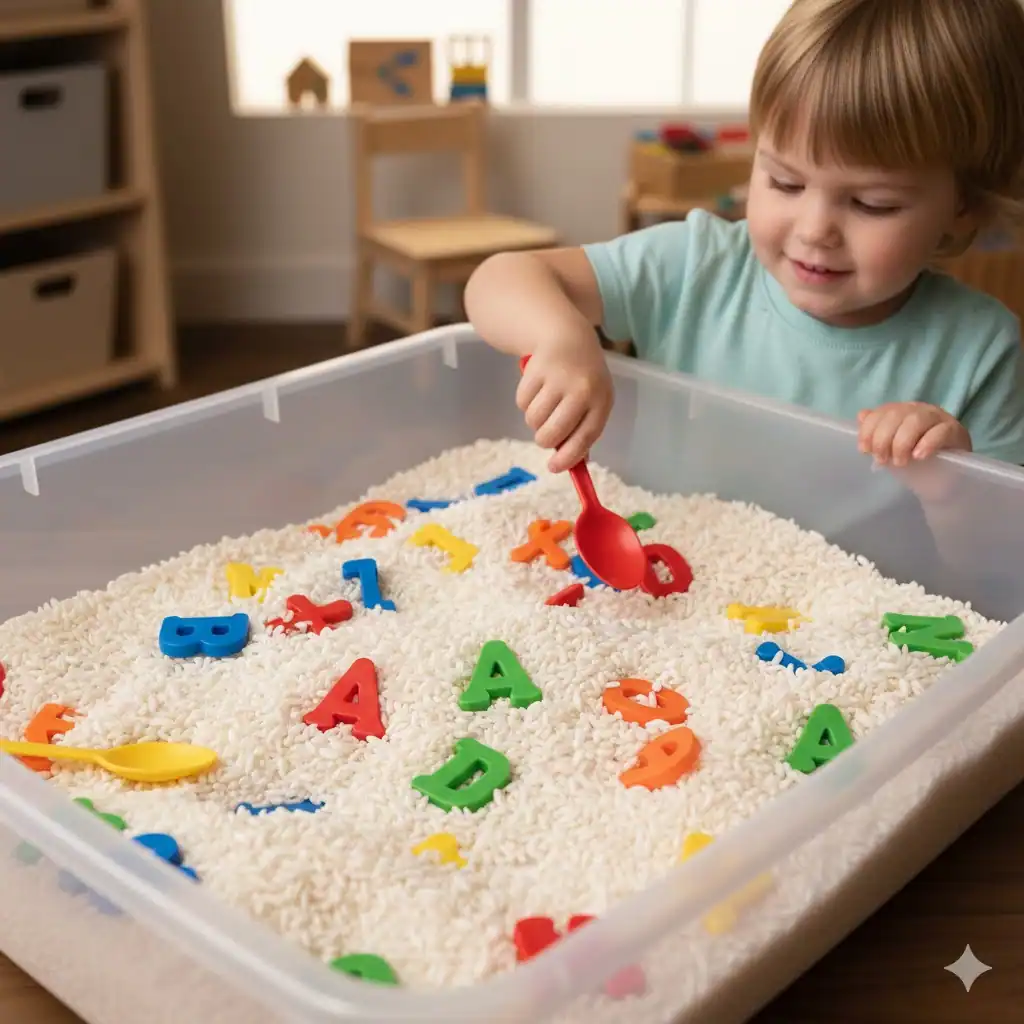
Because nothing’s cooler than finding hidden “treasures.”
- You’ll need:
- Dry rice or beans
- Plastic alphabet letters
- Mini scoops or spoons
Hide the letters and ask your child to find them one by one. You can even make it a game — “Can you find the letter M for Mommy?”
Why it’s clever: It combines sensory exploration with early literacy skills.
12. Holiday-Themed Bin — Festive Fun Year-Round
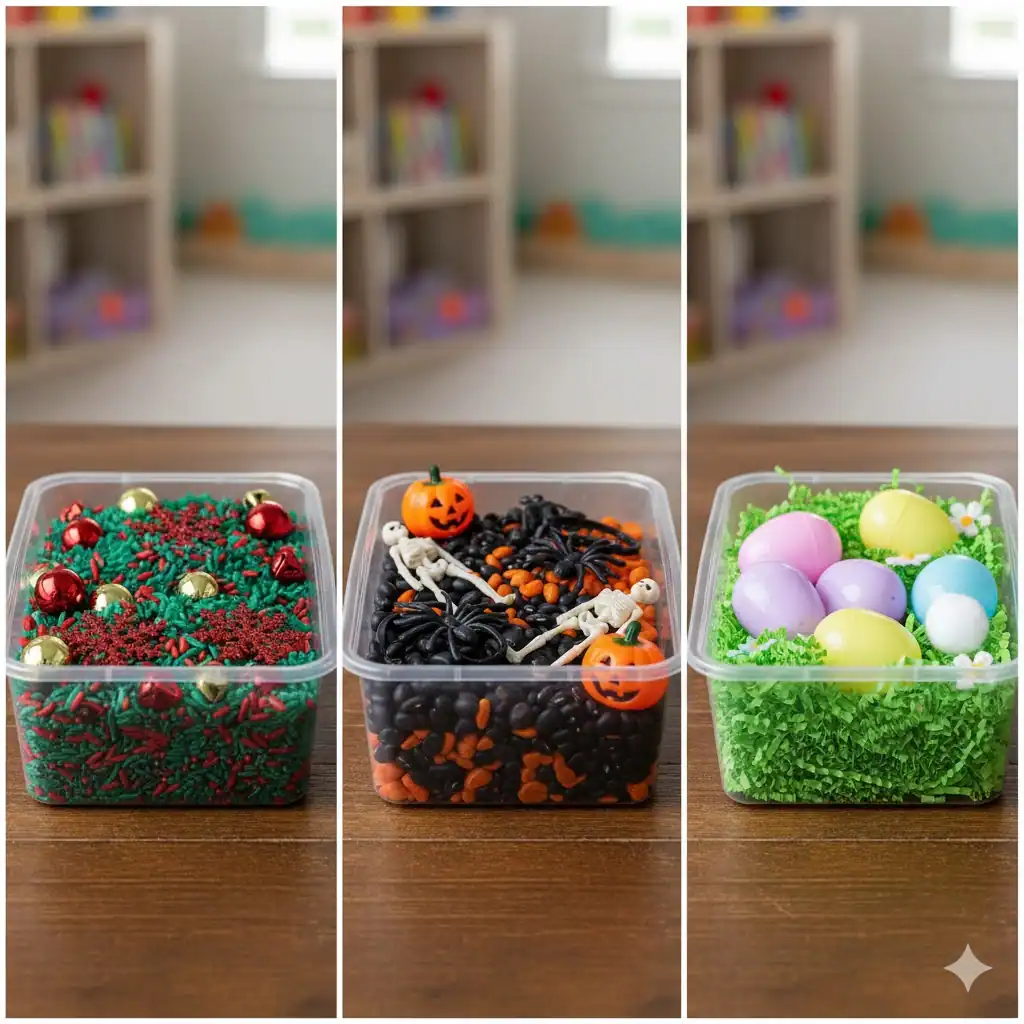
Switch things up with seasonal themes!
- Ideas:
- Christmas: Red and green rice, jingle bells, mini ornaments
- Halloween: Black beans, plastic spiders, and pumpkins
- Easter: Shredded paper “grass,” pastel eggs, and chicks
Why it’s smart: You can reuse the same base filler and just swap accessories — so it’s cost-effective and creative.
13. Water Play Bin — Always a Hit
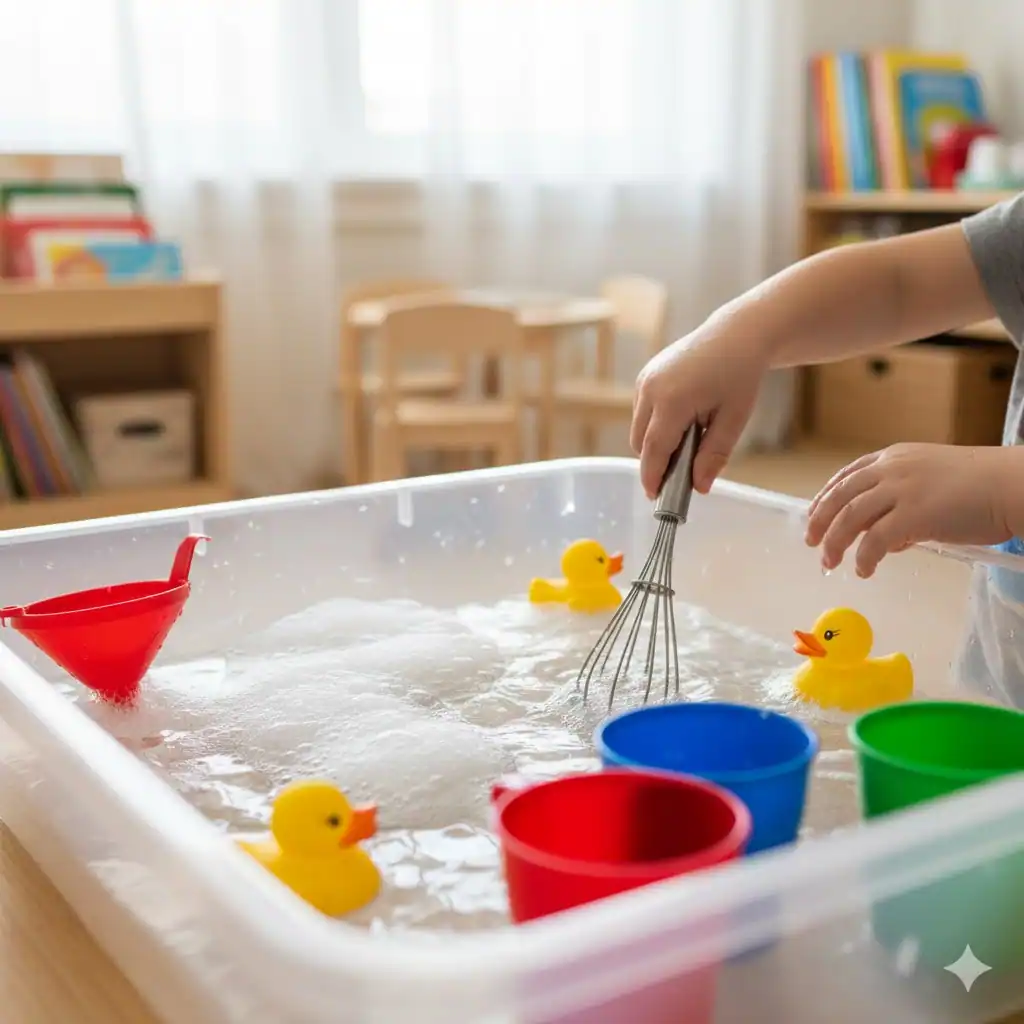
Let’s be honest, kids + water = guaranteed fun.
- You’ll need:
- A shallow tub filled with water
- Cups, spoons, funnels, and sponges
- Floating toys or rubber ducks
Pro tip: Add a few drops of dish soap and a whisk for instant “bubble fun.”
Why it’s amazing: It encourages sensory exploration, teaches cause and effect, and gives you at least 30 minutes of peace. 😉
14. Garden-Themed Bin — For Little Green Thumbs

Who says toddlers can’t garden?
- You’ll need:
- Potting soil (or cocoa powder for a cleaner version)
- Fake flowers or small real ones
- Toy gardening tools
- Small pots or containers
Let your child “plant” flowers, dig soil, and water them.
Why it’s lovely: It teaches responsibility and gives kids a connection to nature — without the bugs.
15. Calm-Down Bin — For Those Wild Toddler Moments
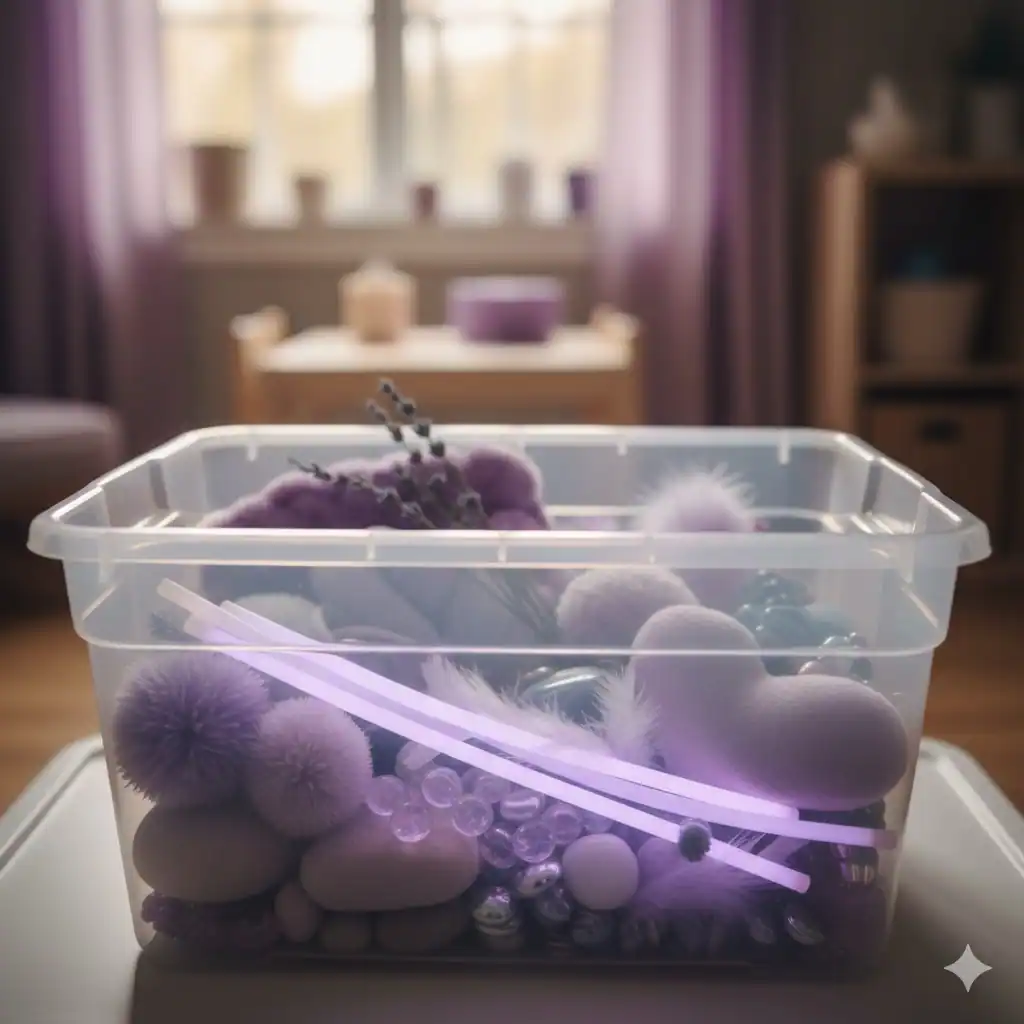
We all know that meltdown mode, right? The one where your kid suddenly hates socks, dinner, and gravity itself. This bin helps.
- You’ll need:
- Soft pom-poms, feathers, or squishy toys
- A few drops of lavender essential oil
- Glow sticks or calming lights
Let your child explore the soft textures quietly. It’s like a mini spa day — toddler edition.
Why it works: It promotes emotional regulation and gives kids a soothing outlet when they’re overstimulated.
How to Make Sensory Bins Less Messy (Because You Deserve Sanity)
Okay, so sensory bins are great — but if you’ve ever vacuumed rainbow rice out of a vent, you know the other side of the story. 😬
- Use a large plastic mat or shower curtain under the bin.
- Set clear rules: “Rice stays in the bin.” (Spoiler: It won’t, but it’s worth a shot.)
- Keep wipes nearby — sticky hands happen.
- Rotate bins weekly to keep things fresh and exciting.
Trust me, the 5-minute cleanup is so worth the 45 minutes of quiet playtime.
Benefits of Sensory Play (AKA Why You’ll Fall in Love with This Stuff)
If you’re wondering, “Is this just glorified mess-making?” Nope! Sensory play is backed by tons of research showing it helps kids develop essential life skills:
- Improve fine motor skills (all that scooping and pouring pays off)
- Encourage independent play (hello, me-time)
- Boost language development through play-based learning
- Support problem-solving and creativity
- Calm kids and reduce anxiety through tactile exploration
It’s basically a learning powerhouse disguised as fun.
A Few Expert Tips for the Best Sensory Bin Experience
- Switch fillers often: Rotate between rice, beans, water beads, and sand. Variety = excitement.
- Store everything in labeled containers: Makes setup a breeze.
- Let kids help clean up: They’ll love being “helpers,” and it teaches responsibility.
- Join in sometimes: Kids love when you play alongside them — and honestly, scooping rice can be surprisingly therapeutic.
Final Thoughts — Why You Need Sensory Bins in Your Life
Here’s the thing: parenting toddlers is hard. Like, really hard. But sensory bins? They make it a little easier — and a lot more fun.
With just a few household items, you can create a magical world of exploration and calm, where your child learns and plays for hours. Whether it’s a dinosaur dig, an ocean adventure, or a color-sorting challenge, these 15 sensory bin ideas are your secret weapon for stress-free afternoons.
So next time your toddler’s bouncing off the walls, skip the screen time and grab a bin. You’ll thank yourself later — and maybe even get to finish that coffee while it’s still hot. 😉