
Alright — you’ve heard the word “swaddle” a thousand times and you want the real, usable version, not the lecture-style nonsense. I learned swaddling the hard way: first attempts looked like origami gone wrong and the baby preferred kicking free like a tiny escape artist. In this guide I’ll show you how to swaddle a newborn like a pro with clear steps, safety tips, and real-world hacks you can use tonight.
I talk like a friend here, so expect little jokes, practical shortcuts, and honest opinions (FYI, Velcro swaddles saved me at 3 a.m.). I keep every sentence active and actionable because you don’t have time for fluff and neither do I. You’ll get step-by-step instructions, different styles to try, common mistakes to avoid, and an easy troubleshooting table. Ready? Let’s make swaddling one less thing you worry about.
Why Swaddling Works (And Why You Should Try It)
Swaddling works because it recreates that snug, womb-like environment babies find comforting right after birth. Babies have the startle reflex, and that reflex wakes them up; swaddling prevents wild arm flails from interrupting sleep. You’ll notice calmer naps and fewer mid-feed meltdowns when you get the wrap right, which means you get more sleep too — win-win.
I always tell new parents that swaddling is not a magic spell but a reliable tool in your newborn-care toolbox. Keep it breathable and safe and you’ll avoid overheating, which is the main cause of swaddle-related fussiness. Most nurses recommend swaddling for the first couple of months, until your baby begins to roll. When your baby rolls, stop swaddling immediately to prevent risks — safety first.
What You Actually Need
You don’t need a shopping cart full of gadgets to swaddle correctly; you just need the right blanket and a calm place to practice. I prefer cotton muslin or bamboo swaddle blankets because they stay breathable and wash well after that inevitable spit-up. You can buy Velcro or zipper swaddles if folding fabric origami is not your thing — IMO they make middle-of-the-night wrapping simple and reliable.
Use a flat surface like a bed or changing table and keep a clean, soft towel nearby for quick cleanups. Try to swaddle right after a feeding or during a calm moment so the baby stays relaxed while you wrap. If you practice a few times during daylight, you’ll do it with your eyes half-closed at 2 a.m. and still succeed.
Step-by-Step: How to Swaddle a Newborn Like a Pro

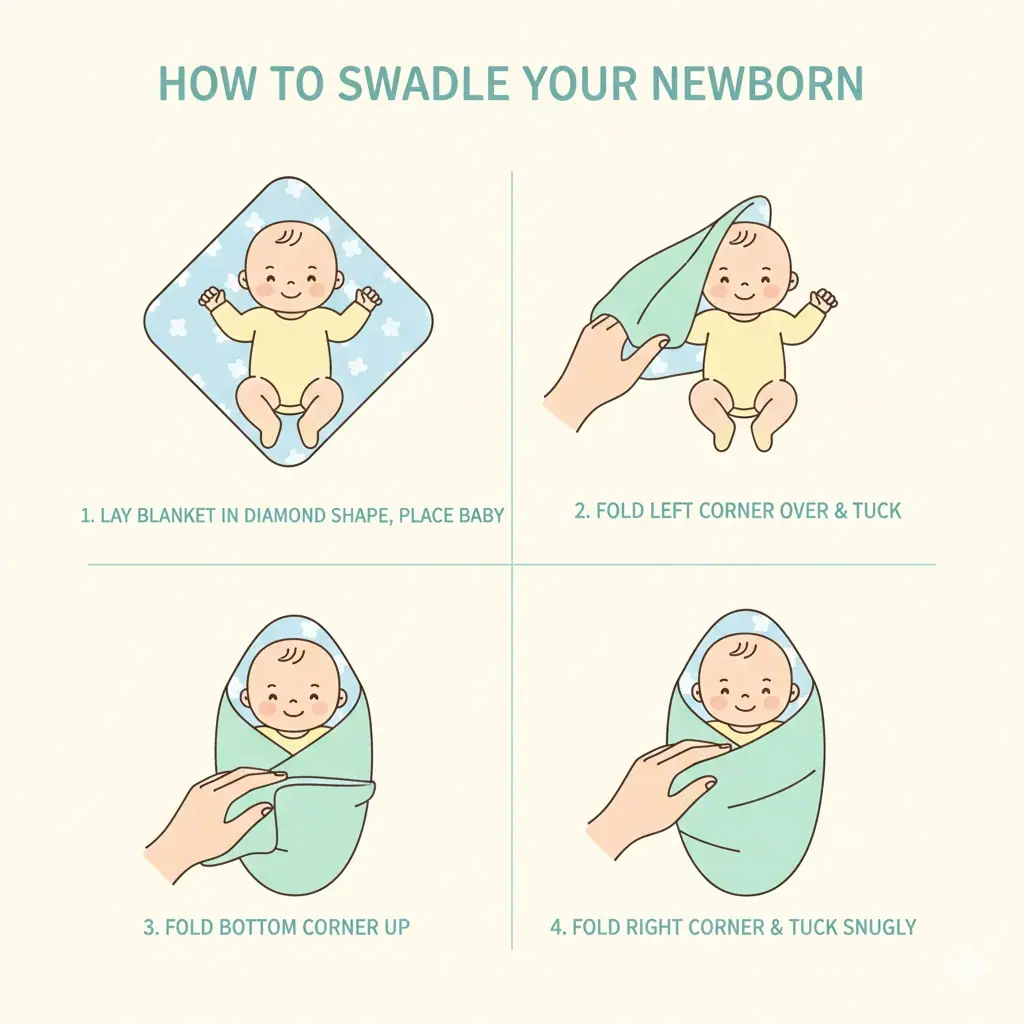
Follow these steps exactly and you’ll stop wrestling with that blanket burrito. First, lay the blanket in a diamond shape and fold the top corner down about six inches so you get a straight edge for the shoulders. Then lay the baby on their back with their shoulders just below that fold and keep their head uncovered — never cover the face. Next, wrap the right side across the chest and tuck it under the baby’s left side while keeping that arm snug inside the blanket.
Fold the bottom corner up over the baby’s feet and tuck it behind their shoulders, leaving enough room for hip movement. Finally, pull the left corner across and tuck it under the right side so the wrap looks neat and secure. Check that you can slide two fingers between the blanket and your baby’s chest to make sure breathing isn’t restricted. If you can do all this in under 30 seconds, congratulations — you’re basically a swaddle pro.
Quick Visual Checklist
- Blanket in diamond shape with top folded down ~6 inches.
- Baby on back, head above blanket edge.
- Right corner across chest, tucked under left side.
- Bottom corner up, tucked behind shoulders with hip room.
- Left corner across and tucked; two-finger gap at chest.
Swaddling Styles: Try Them All
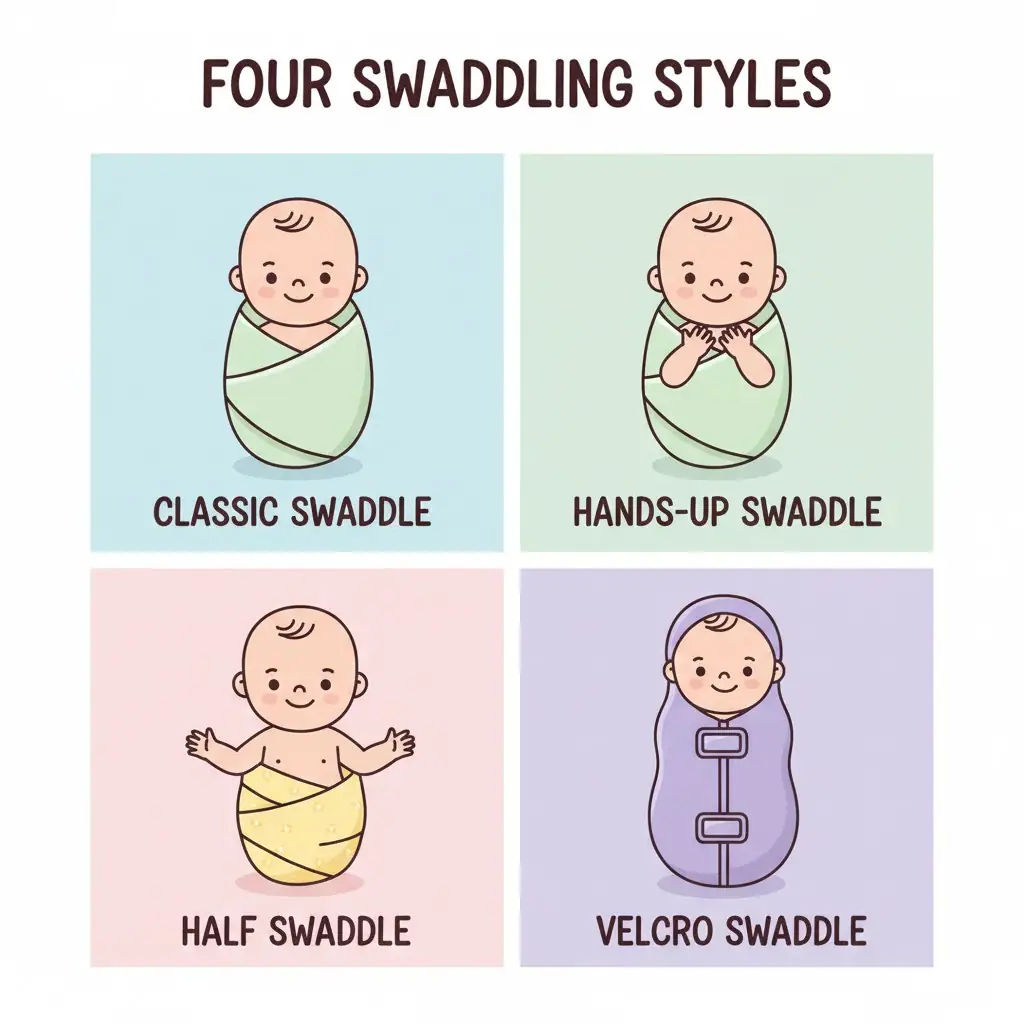
Not every baby loves the same swaddle, so experiment with styles and watch how your baby reacts. The classic swaddle tucks both arms in and gives that deep womb feel — perfect for newborns who need extra comfort. The hands-up swaddle lets the baby keep hands near their face so they can self-soothe while still feeling secure; some babies prefer this and protest the more restrictive wrap.
The half swaddle keeps the torso snug but leaves arms free, which helps if your baby likes to flail while still needing some warmth. Finally, Velcro or zipper swaddles remove the folding drama; I used them during the first month and never looked back. Try each style during daytime naps so you can see which one helps the baby settle fastest and sleep longest.
Common Mistakes (And How to Avoid Them)
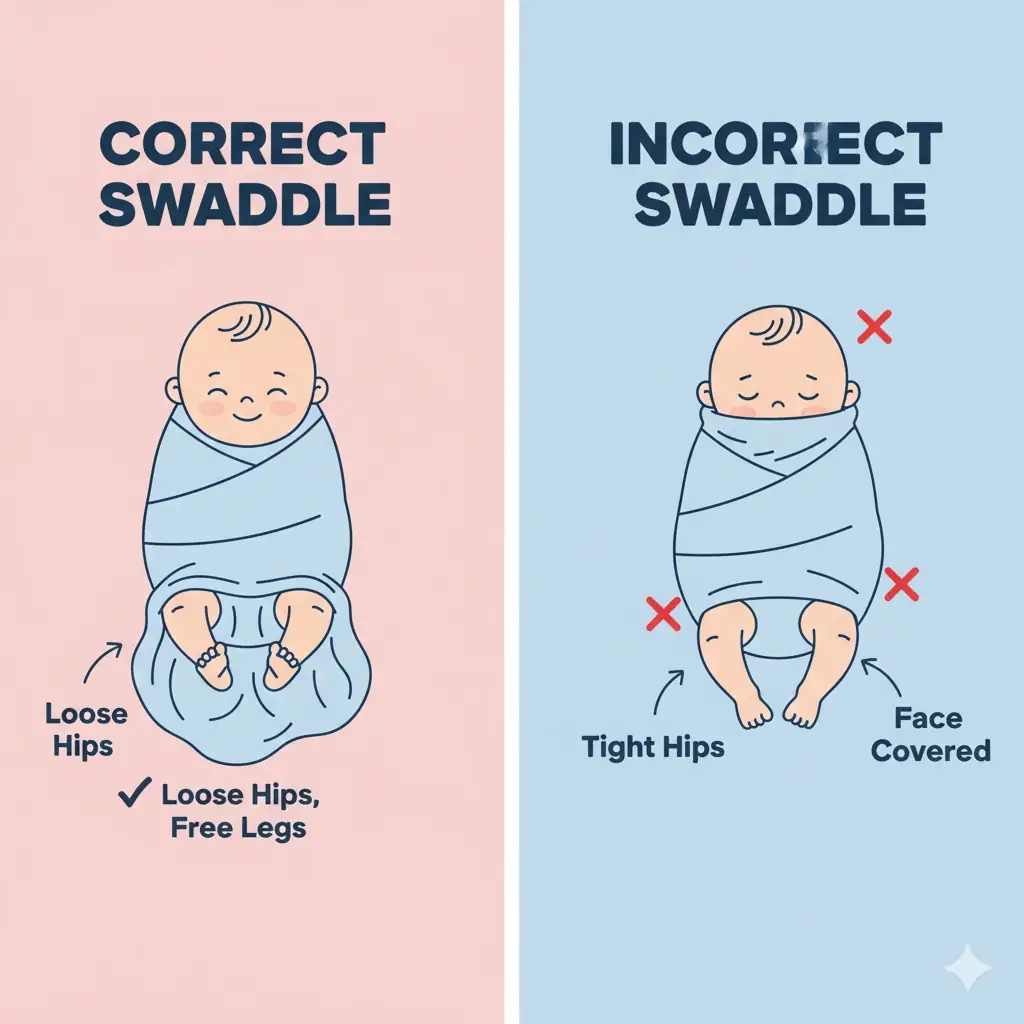
Parents make a few repeated mistakes that are easy to fix once you know them. First, wrapping too tightly around the hips restricts healthy leg movement and can increase the risk of hip dysplasia — always leave space for the legs to bend. Second, covering the baby’s face or tucking the blanket above the shoulders can block airways; keep the blanket below the neck.
Third, using thick blankets can cause overheating; choose breathable fabrics and check your baby’s neck for sweat. Fourth, keep swaddling off-limits once the baby starts rolling because a swaddled, rolled baby cannot reposition safely. Finally, if your baby keeps escaping the swaddle, try a different style or a Velcro option — sometimes the baby simply prefers movement.
When to Stop Swaddling
You can’t swaddle forever and you shouldn’t — most babies start rolling between two and three months and that’s your cue to stop. Once your baby rolls, swaddling becomes a safety hazard because they can’t push themselves up if they end up on their tummy. Transition to a wearable sleep sack that gives freedom for legs and arms while still offering that cozy feel.
Some parents prefer a phased approach: switch to hands-up swaddles, then to sleep sacks with zipper or arm options. Watch your baby’s cues too; if they keep breaking out of the swaddle or fussing, they may be ready for the next stage. Remember, the goal is safe sleep, not clinging to a routine.
Quick Troubleshooting Table
| Problem | Possible Cause | Solution |
|---|---|---|
| Baby keeps breaking free | Blanket too loose or baby dislikes arm restriction | Try a Velcro/zipper swaddle or wrap snugger around torso |
| Baby overheats | Blanket too thick or room too warm | Switch to muslin or bamboo; lower room temp |
| Baby cries when swaddled | Hates arms down | Use hands-up or half-swaddle style |
| Frequent wake-ups | Startle reflex or loose swaddle | Wrap snugger around arms or try a different style |
Final Thoughts — You’ve Got This
Swaddling looks tricky until it becomes routine, and then it becomes one of your best hacks for calmer nights. Keep your technique safe, breathable, and hip-friendly and you’ll see the benefits quickly — better naps, quicker soothing, and fewer middle-of-the-night meltdowns. If you prefer low-drama options, Velcro or zipper swaddles work wonders and save time when you are exhausted.
Trust your instincts: if the baby resists, change the style or stop for a bit; babies show their preferences early and they usually win. Above all, enjoy the small victories — that first long nap after you swaddle just right feels glorious. Good luck, and remember: you’re learning, improving, and doing a great job — even on the nights that feel endless. 🙂