

Hey, fellow sleep-deprived parent! 😅 So, you’ve just welcomed a tiny human into your life, and suddenly your whole world revolves around… feeding times. Seriously, who knew a little human could eat more frequently than a vending machine on overdrive? Don’t worry — I’ve been there, and I’m here to spill the newborn feeding secrets that doctors often leave out. Yes, those little nuggets of wisdom that don’t make it into the pamphlets.
Now, before you roll your eyes thinking, “Another one of those boring guides,” hold up. I’m not here to lecture you like a robot. This is me, talking to you over coffee (or wine, I don’t judge), giving you real, practical tips to survive those first few months without losing your sanity. So, grab your bottle, settle in, and let’s get this newborn feeding thing under control.
Why a Feeding Schedule Is Actually Your Best Friend
The Myth of “Just Feed On Demand”
Look, I get it — every pediatrician says, “Feed your newborn on demand.” Sounds simple, right? Well… not really. Imagine a tiny creature crying every two hours, sometimes three, sometimes… just for fun. 🙃 Feeding on demand is great in theory, but in reality, it’s like trying to follow a traffic light that changes color every 30 seconds.
Here’s what I learned the hard way: having a flexible schedule keeps both you and baby sane. It doesn’t mean your kid becomes a robot eating at 3 pm sharp. It means you know roughly when they’re hungry, so you can plan naps, laundry, and maybe — just maybe — a shower.
Benefits of a Feeding Schedule

- Predictable Sleep Cycles: Babies thrive on routine, and so do parents. A predictable feeding schedule often leads to longer naps and less chaotic nights.
- Healthy Growth: Structured feeding ensures your baby gets enough nutrition consistently. No missed calories, no cranky surprises.
- Less Stress for Parents: Knowing roughly when the next feeding is due reduces that constant panic of “Are they hungry?”
- Easier Tracking: You can log feedings and notice patterns. This is super helpful if your pediatrician ever asks, “How much is your baby eating?”
Honestly, having a feeding plan doesn’t turn your baby into a clockwork robot, but it does give you some control back in a world where diapers rule everything.
Newborn Feeding Schedule Basics
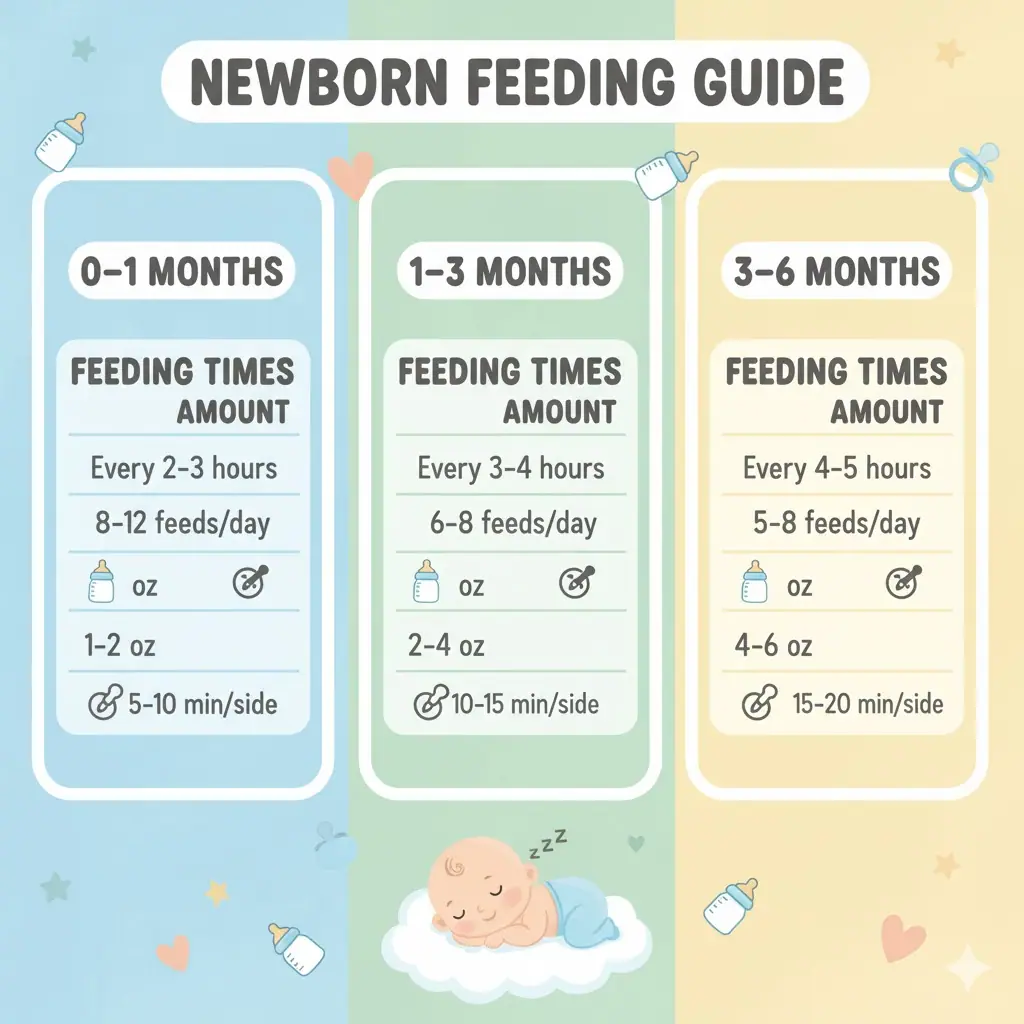
First Month (0–4 Weeks)
- Frequency: 8–12 times per 24 hours (yes, I know it’s brutal).
- Amount: 1.5–3 ounces per feeding if formula-fed; breastfed babies should go until they seem satisfied.
- Timing: Roughly every 2–3 hours, but don’t stress over the exact minutes.
- Tip: Watch hunger cues — rooting, lip smacking, fussiness. Don’t wait until the full-blown meltdown stage.
FYI, nighttime feedings are unavoidable. Yes, I said it. No, you don’t get a pass on sleep. But having a rough schedule can make nights slightly more predictable.
One to Three Months
- Frequency: 7–9 feedings per 24 hours. Your baby might stretch to 3–4 hours between feeds.
- Amount: 3–4 ounces per feed (formula); breastfeeding is variable — trust your baby.
- Tip: Start noticing patterns. Maybe your baby eats more at night or prefers cluster feeding in the evening. You’ll thank me later for this heads-up.
At this stage, your baby might still be waking up hungry at odd hours, but a predictable rhythm is starting to form. Think of it as baby’s version of “Netflix binge schedule.”
Three to Six Months
- Frequency: 6–8 feedings per 24 hours.
- Amount: 4–6 ounces per feed.
- Tip: You can start stretching the time between feedings if your baby is gaining weight well. Always check with your pediatrician, but babies this age often tolerate longer gaps, especially overnight.
By now, you’re becoming a feeding ninja. You’ll start predicting the exact moment your little one starts squirming like a tiny alarm clock.
Breastfeeding vs. Formula Feeding Schedules
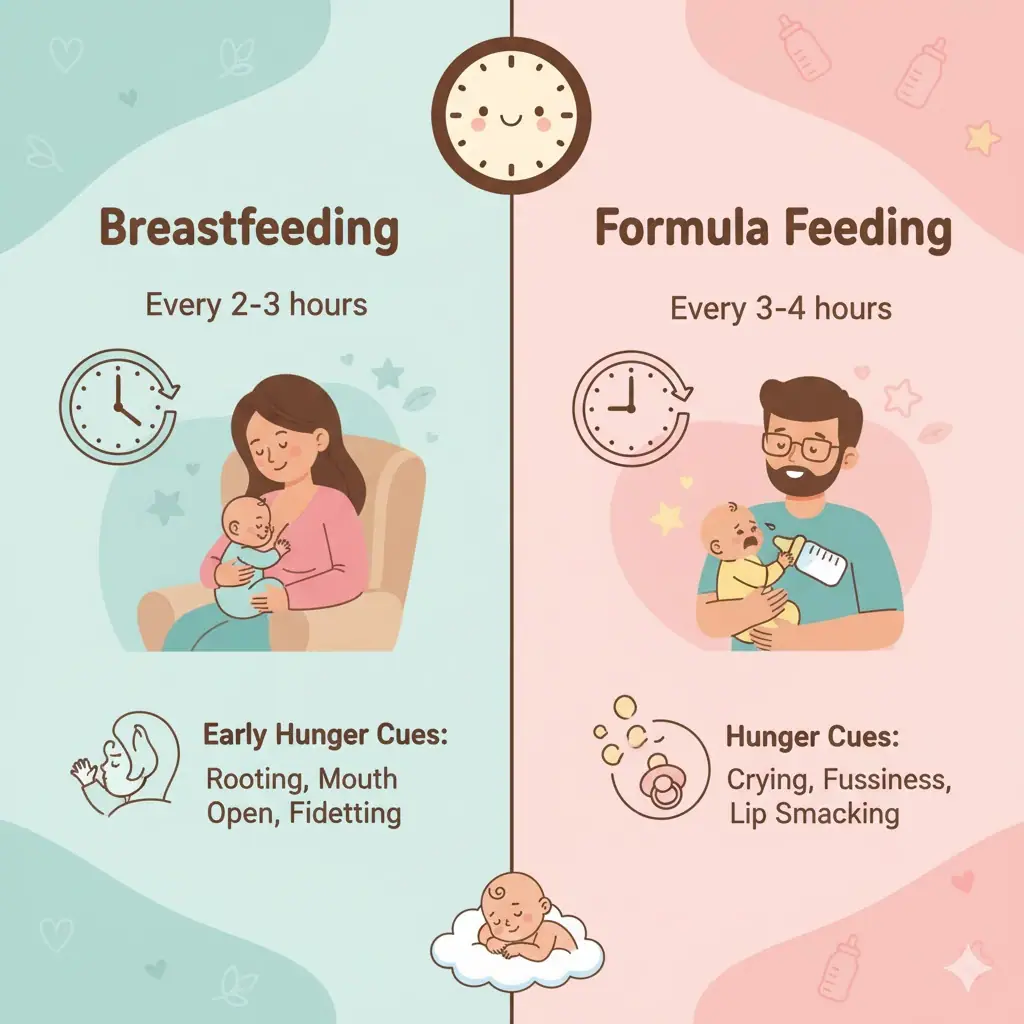
Breastfeeding Schedule
- Feed on demand, but aim for a rough rhythm: every 2–3 hours.
- Watch for cluster feeding (those evenings where they want to eat every 30 minutes). Yes, it’s exhausting. Yes, it’s normal.
- Tip: Keep a nursing log if you’re trying to track which side you last fed on. It’s a life-saver.
Formula Feeding Schedule
- Stick to every 3–4 hours.
- Offer 2–4 ounces at a time initially, then gradually increase.
- Formula-fed babies sometimes have more predictable patterns, which can be a blessing for sleep-deprived parents.
Honestly, whether you’re breastfeeding or formula-feeding, the key is consistency, flexibility, and trust in your baby’s cues.
Common Mistakes Parents Make
- Overfeeding: Babies don’t need 5 ounces every 2 hours right away. Watch their hunger cues, not the clock.
- Skipping Feedings: Thinking you’re “training” your baby is risky. Newborns need constant calories.
- Ignoring Growth Spurts: During growth spurts (often 2–3 weeks, 6 weeks, 3 months), expect more frequent feedings. Don’t freak out; it’s temporary.
- Not Tracking: Seriously, keep a simple log. It helps identify patterns, troubleshoot fussiness, and peace of mind for new parents.
Nighttime Feeding Tips
- Keep lights low: Avoid stimulating your baby. Pretend you’re a ninja.
- Prepare everything in advance: Bottles, burp cloths, diapers — fewer excuses to fully wake up.
- Cluster feed in the evening: Feed your baby more frequently before your bedtime. Might help stretch that first big sleep block.
- Stay calm: Babies pick up on stress. Laugh if your baby spits up… or just cry silently with them. 🙂
Tracking Your Feeding Schedule
Seriously, I can’t stress this enough. Keeping a simple notebook or app helps more than you think. Here’s what to log:
- Time of feeding
- Amount consumed (if formula)
- Duration (if breastfeeding)
- Notes on mood or spit-up
Tracking helps identify patterns, growth spurts, and even subtle feeding issues before they become big problems. Think of it as your parenting cheat sheet.
Tips for Sticking to a Feeding Schedule

- Stay flexible: Your baby is not a metronome. Some days will be off. Chill.
- Tag team if possible: If you have a partner, alternate night shifts or feedings. You’ll both survive longer.
- Use reminders: Phone alarms aren’t just for work; they’re for sanity.
- Celebrate small wins: Even one predictable 3-hour stretch is a victory.
Remember, this schedule is a tool, not a cage. You’re still human, and your baby is a tiny unpredictable human. That’s okay.
When to Call the Pediatrician
Sometimes, it’s not just fussiness or weird feeding patterns — there are real red flags. Call your doctor if:
- Your baby refuses multiple feedings in a row
- There’s poor weight gain
- Excessive vomiting or diarrhea occurs
- Your baby seems lethargic or unusually sleepy
Trust me, there’s no shame in asking questions. Pediatricians exist for a reason — and sometimes, your gut feeling is 100% right.
Conclusion: You Got This!
Look, there’s no magic formula that guarantees perfect sleep or effortless feedings. But a practical newborn feeding schedule — one that balances flexibility with structure — is your best friend. It helps you predict hunger, track growth, and maybe, just maybe, enjoy a tiny stretch of sanity in this wild newborn whirlwind.
So, grab that logbook, embrace those cluster feeds, laugh at the chaos, and remember: every baby is different, but with a little planning, patience, and humor, you’ve totally got this. And hey, someday you’ll look back and laugh at those sleepless nights… maybe. 😅